
On this page+
When a car with the 7-speed DQ200 DSG arrives with harsh shifts, a warning lamp or emergency mode, the most expensive way to find the fault is to guess. A fault code usually tells you which circuit is affected, but not which part has failed: a solenoid valve, the pump, the pressure accumulator or an O-ring in the valve body. Replacing parts one by one and refitting the unit to see what happens costs labour hours, and the car may still come back with the same complaint.
The FDY DQ200 DSG 7 Mechatronic Test Device was developed to remove this uncertainty. This guide explains what the device tests, why bench testing is more reliable than trial and error, and how a workshop uses it in daily work, including a step-by-step leak test and how to read the pressure logs.
What is the FDY mechatronic test device?
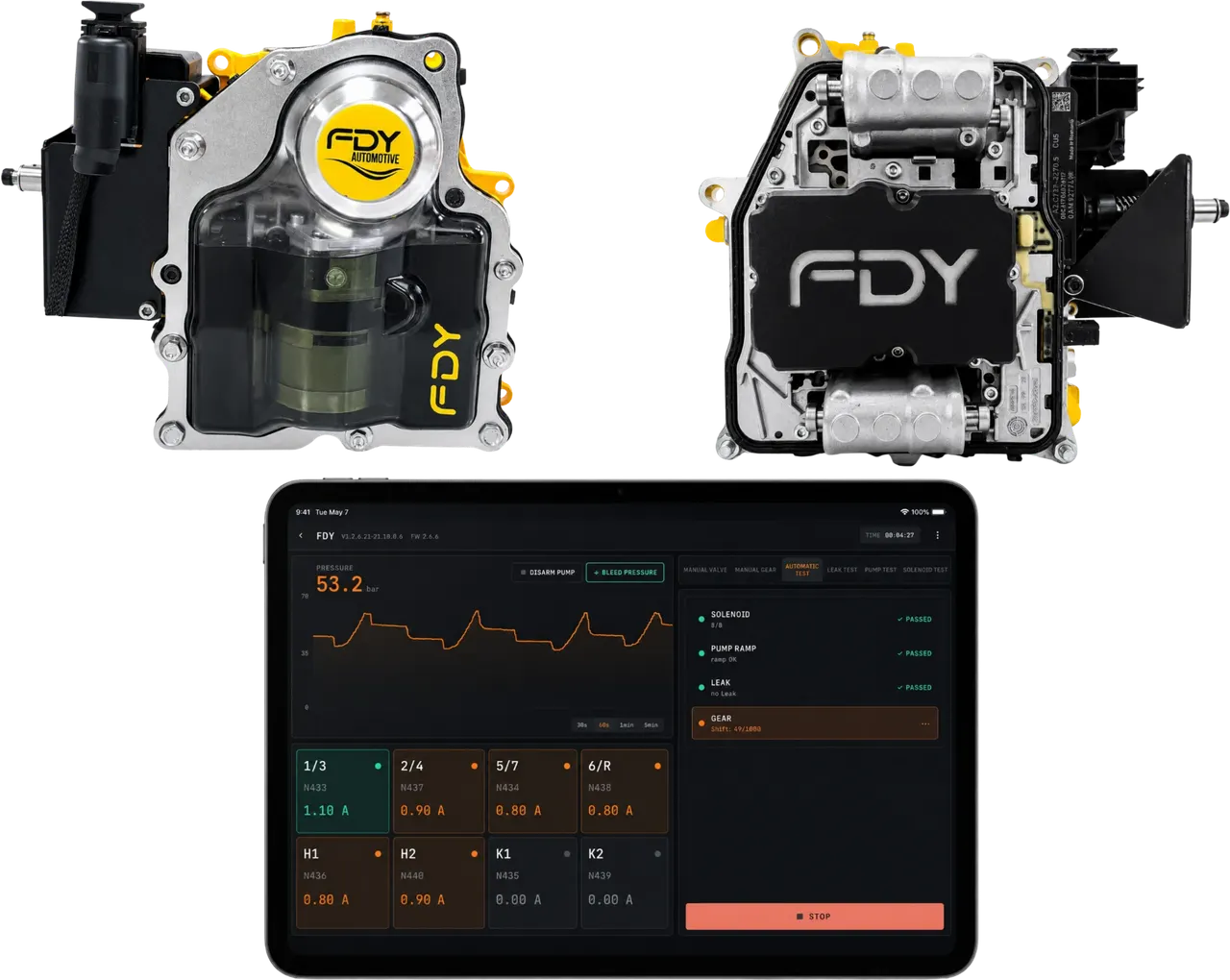
The FDY Test Device is a professional diagnostic and test system for the mechatronic unit of the 7-speed dry-clutch DQ200 DSG (gearbox codes 0AM and 0CW). It works entirely off the vehicle: you check the solenoid valves, the pump, the pressure accumulator and every gear on the bench before the unit goes back into the car. You find the exact point of failure, and you repair it once.
Set-up takes about three minutes. The device tests within two operating pressure ranges, 42–60 bar and 52–60 bar, so it can be matched to different mechatronic requirements. Its ergonomic design and clear interface mean that any technician in the workshop can use it after minimal training.
Why bench testing beats guessing
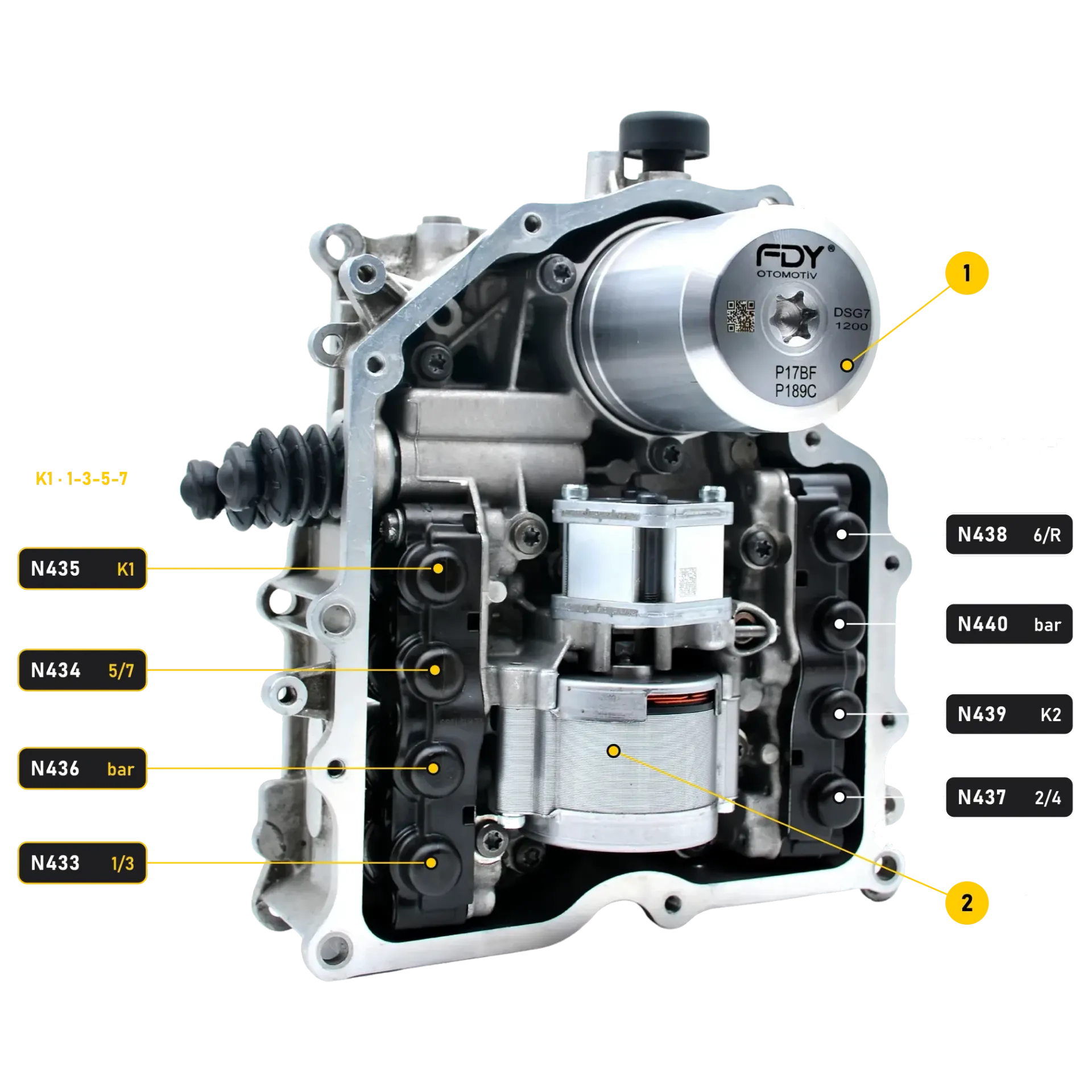
The DQ200 mechatronic (J743) combines an electronic control unit and an electro-hydraulic unit, and it has its own hydraulic oil circuit, separate from the gear oil. The V401 electric pump and the pressure accumulator keep the system pressure between 40 and 60 bar, and eight solenoid valves (N433–N440) direct this pressure to the gear actuators and the two clutches. A problem anywhere in this chain looks much the same to the driver: harsh or delayed shifts, a warning lamp, emergency mode. The role of each valve is explained in how the DQ200 mechatronic works, and the meaning of each code in the DQ200 fault code list.
A bench test separates the chain into its parts and checks them one by one. For the workshop, this means:
- No fault-finding by parts replacement. The measurements show which valve and which circuit are at fault.
- Less labour. All checks are done on the bench, instead of fitting and removing the unit to try again.
- Repeatable results. The fully automated test runs the same steps on every unit, which reduces human error.
- Fewer comebacks. The unit is also tested under extended operating conditions before it goes back into the car.
What the device tests
Solenoid currents
The device measures the precise current draw of each solenoid valve. A valve that is faulty or outside the expected range is visible immediately, so you do not have to guess which solenoid has failed. Contaminated solenoids can be cleaned and tested again with the FDY Black Box.
Pressure leaks and sealing
Each valve circuit receives its own targeted pressure test. This makes even small leaks visible and shows which gear's circuit the leak belongs to.
Pump and pressure build-up
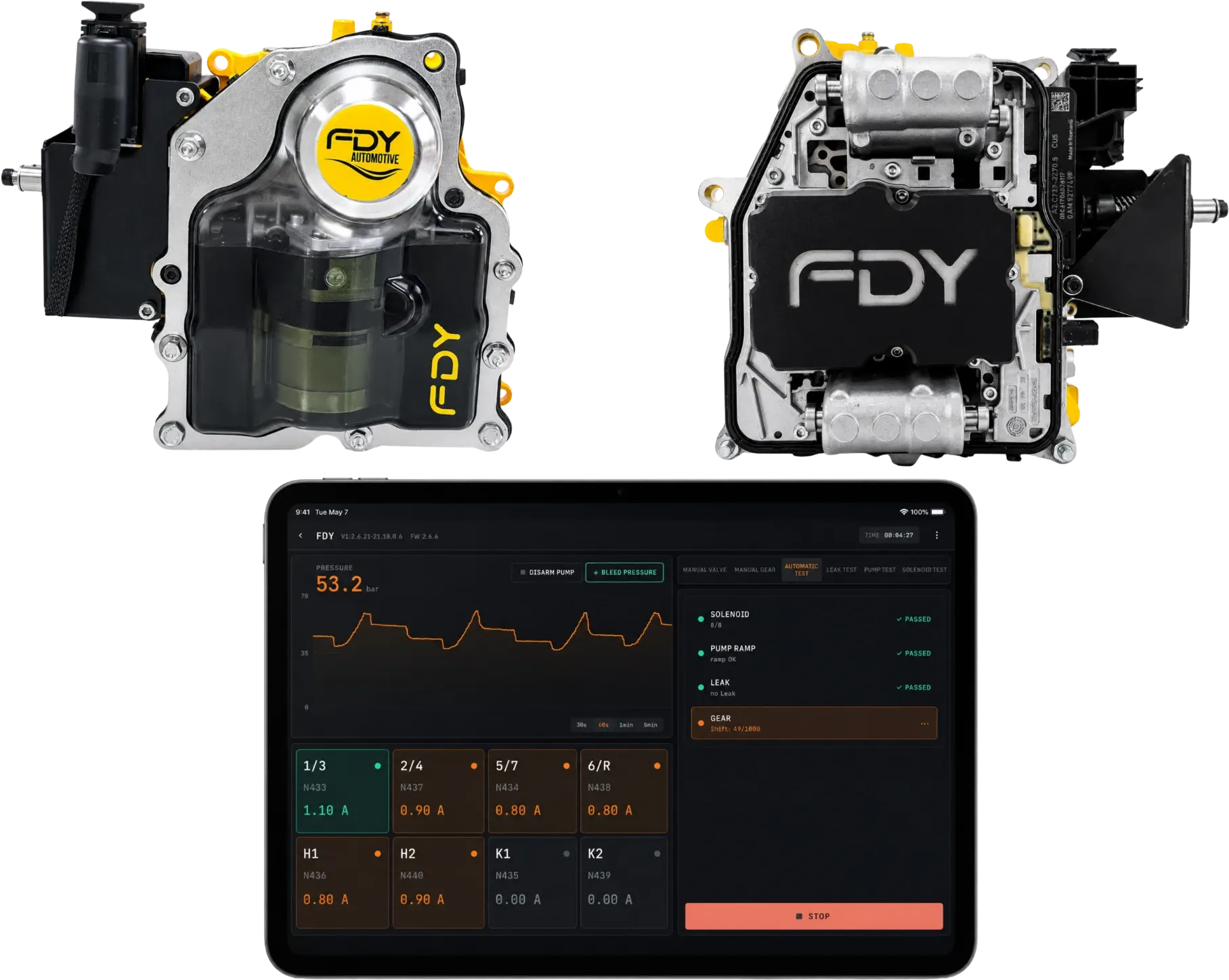
The device measures how the pump pressurises the system and how the pressure builds up. If pressure fails to build, it alerts you and resets automatically to re-engage the pump, so the test is not interrupted. Throughout the test, the screen shows the live pressure curve, the current on every solenoid and the status of each test stage.
Automated gear test and durability simulation
In automated test mode, the device simulates up to 1,000 gear shifts. This is the most practical way to see how the mechatronic performs under real operating conditions, and it exposes intermittent faults that appear only after the unit has warmed up or has been running for a long time. If you suspect one particular gear, you can select it manually and analyse it in detail.
In the workshop: finding a pressure leak step by step
Manual control is one of the most useful features of the device. When you suspect a pressure leak, follow these steps:
- Switch the device to Manual Gear Test mode.
- With the gearbox in N (neutral), press Reset Pressure.
- Watch the rate of pressure drop. If the pressure stays above 35 bar for more than one minute, there is no significant leak in this state.
- Repeat the test for each gear separately, for example: select 6th gear, reset the pressure and watch again.
- If the pressure drops much faster in one gear than in the others, you have isolated the problem. The fault lies in the circuit of that gear's valve: an O-ring, the valve body itself or the solenoid.
If the leak comes from an O-ring or a seal, the mechatronic overhaul repair kit brings the seals, gaskets, check balls and oil filter together in one set of 15 components. After the repair, run the test again to confirm the result.
Reading the pressure logs and the test report
The device records pressure drops precisely. The important part is knowing which values indicate a real problem:
- Logging threshold, 35 bar: the device flags and logs every pressure reading below 35 bar.
- Borderline values: log entries such as 34.5 bar are usually within a tolerable range.
- Action point, 30 bar or below: a drop to this level is a clear sign of a serious pressure leak. Investigate it with the manual leak test described above.
During the test, every pressure drop and every shifting error is monitored and summarised in a report. The printable report also helps you document the work for your customer.
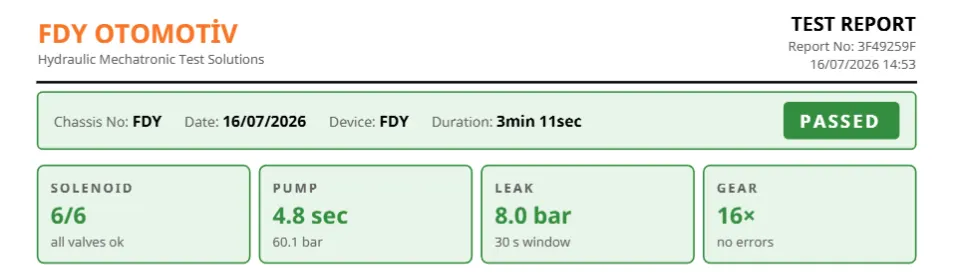
The device software is improved through online updates, so new features reach every device in the field. With the latest update you define your own reference values, tolerances and test conditions, and you run each test with the parameters that fit your workflow.
Frequently asked questions
01Does the device test the mechatronic while it is in the car?+
No. The FDY test device is a bench test system: the mechatronic unit is tested off the vehicle. The aim is to confirm that the solenoids, the pump, the pressure accumulator and the gear shifts are in order before the unit is fitted.
02Which pressure value indicates a leak?+
The device logs every value below 35 bar. Borderline values such as 34.5 bar are usually tolerable; a drop to 30 bar or below indicates a serious leak and calls for the manual leak test.
03How many gear shifts does the automated test simulate?+
Up to 1,000. This shows problems that appear only after the unit has warmed up, before the mechatronic goes back into the car.
04Is the device software updated?+
Yes. Online updates deliver new features and improvements to every device. Since the latest update, you can define your own reference values, tolerances and test conditions.
05What is the difference between the test device and the FDY Black Box?+
The test device checks the complete mechatronic unit: solenoid currents, leak tightness, pump, pressure build-up and gear shifts. The FDY Black Box is designed to clean and test solenoid valves: it works with 5 V and 12 V solenoids, is controlled by an Android app and handles 4 valves at once.
Get the details on the test device
Technical highlights and report screens are on the FDY DQ200 mechatronic test device page. For a price, contact us: we reply to quote requests within one business day, and our engineers provide 24/7 technical support to workshops and distributors during set-up and use.