
On this page+
The 7-speed DSG is known for fast gear changes and good fuel economy, but like any complex system it can develop faults over time. Judder when pulling away, a flashing gear indicator, harsh shifts or a sudden loss of drive are the most common complaints from drivers of Volkswagen, Audi, Seat and Škoda models with this gearbox.
This guide takes each symptom in turn, explains what usually causes it and shows how to fix the cause, which in many cases does not require a complete new mechatronic unit.
Why most 7-speed DSG problems start in the mechatronic
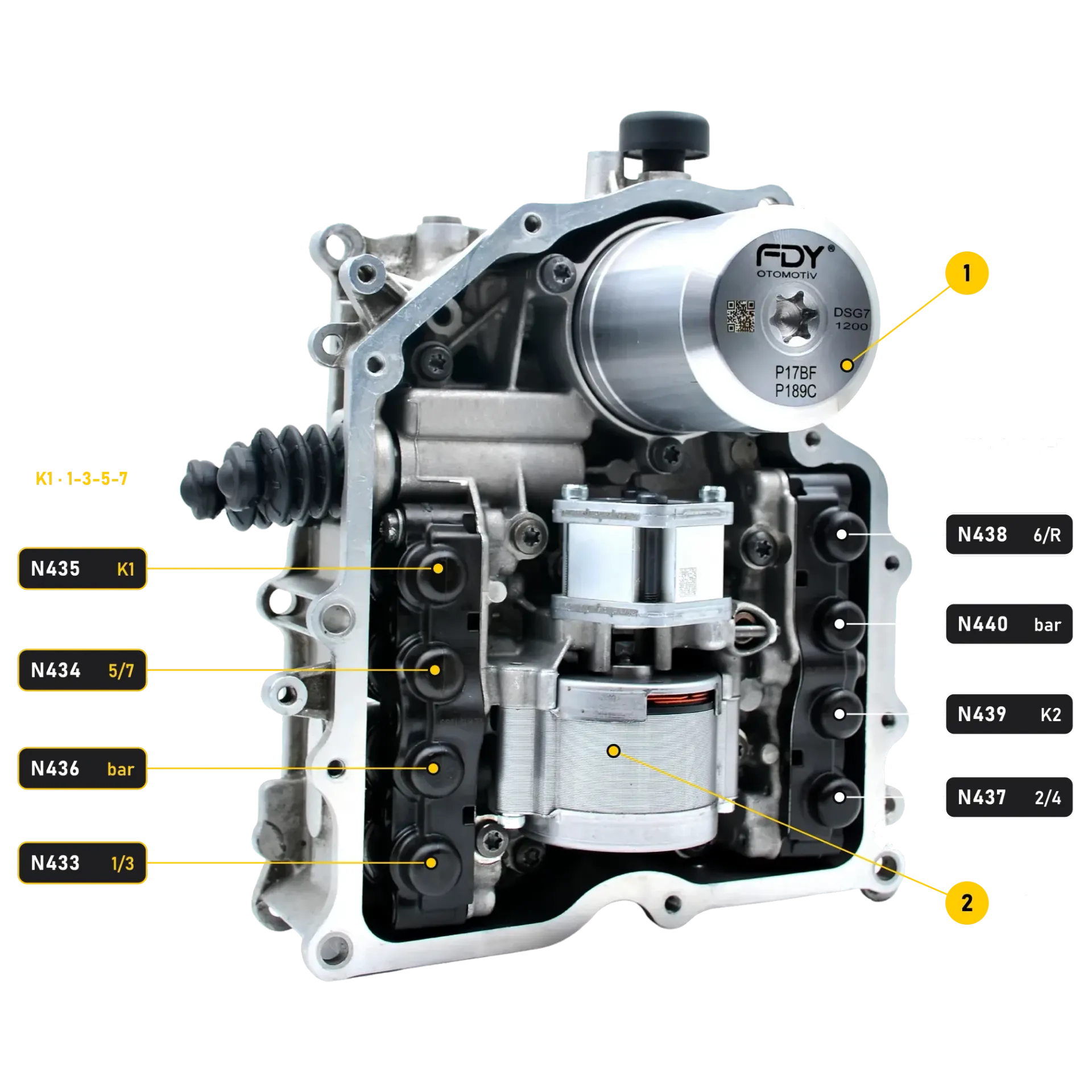
The 7-speed dry-clutch DSG is the DQ200 (gearbox codes 0AM and 0CW). Mechanically it is two gearboxes in one housing: sub-gearbox 1 carries gears 1, 3, 5 and 7 and is driven by clutch K1; sub-gearbox 2 carries gears 2, 4, 6 and reverse and is driven by clutch K2.
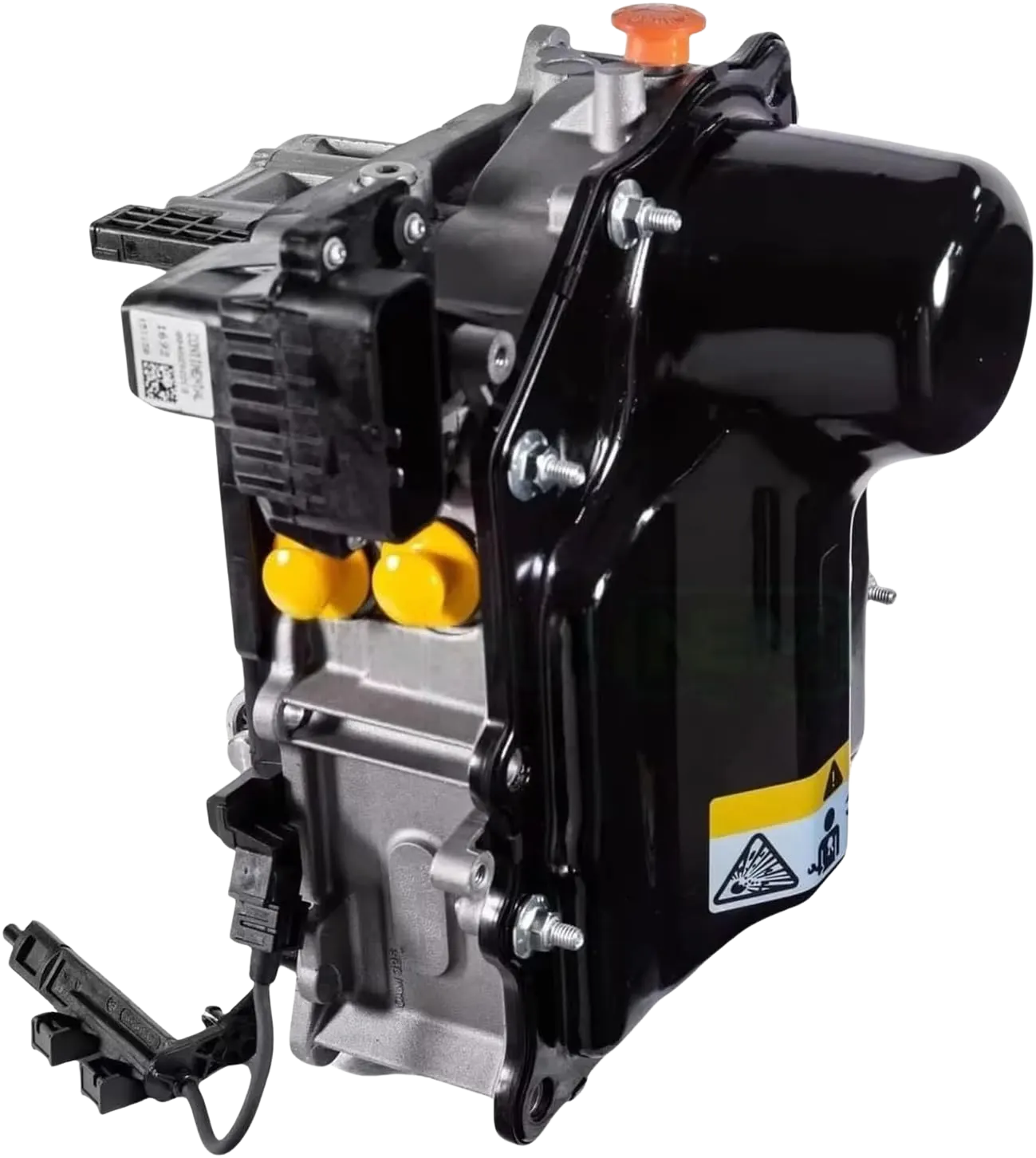
Both halves are controlled by the mechatronic unit (J743), the electronic control unit and the electro-hydraulic unit in one housing. It has its own hydraulic oil circuit, separate from the gear oil. The electric pump (V401) and the pressure accumulator keep the system pressure between 40 and 60 bar, and eight solenoid valves (N433–N440) use this pressure to engage the gears and operate the clutches. Hydraulic pressure loss and electronic faults inside this unit cause the majority of DSG problems, which is why the diagnosis almost always starts here.
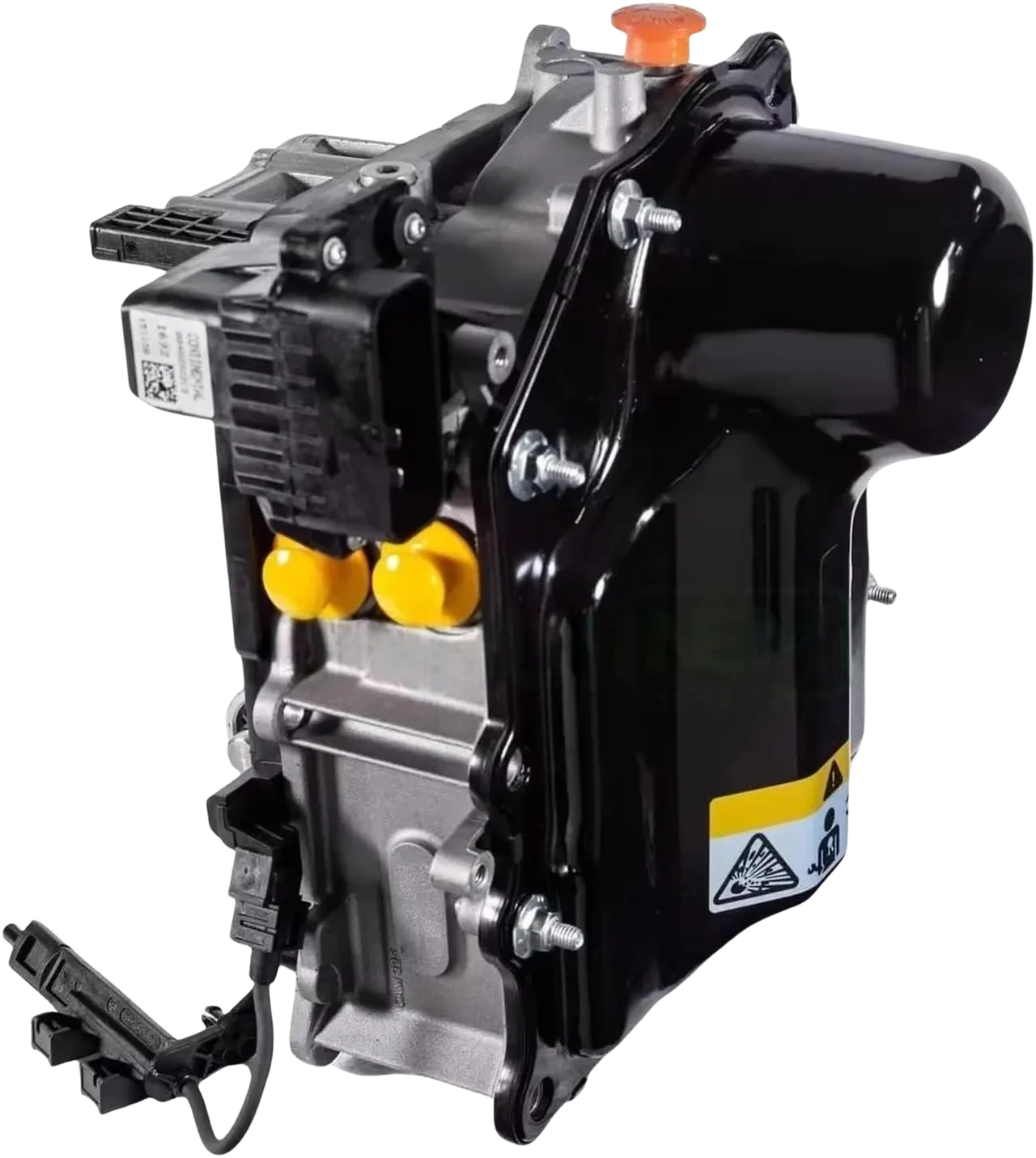
Quick reference: symptom, likely cause, solution
| Symptom | Likely cause | Solution |
|---|---|---|
| Judder or shudder when pulling away | Clutch wear, or clutch control problems | Read the fault memory, check the clutch |
| Flashing P R N D S display, warning lamp | Stored fault, gearbox in emergency mode | Read and interpret the fault codes |
| Only odd (1-3-5-7) or only even (2-4-6-R) gears | One sub-gearbox switched off: solenoid, sensor or pressure fault | Find the faulty circuit before replacing parts |
| Delayed or harsh shifts, P17BF, P189C, P1895 | Pressure loss, usually a cracked accumulator housing | Reinforced accumulator repair kit |
| Stuck in one gear, will not shift up or down | Sticking solenoid valves, metallic debris | Clean and test the solenoids; check for metal chips |
| Sudden loss of drive, gearbox drops into neutral | Mechatronic cannot control either sub-gearbox safely | Full diagnosis and a bench test of the unit |
The symptoms explained
Judder or shudder when pulling away
A vibration or shudder at low speed or when accelerating from a stop is one of the most common complaints. The DQ200's dry clutches are sensitive to heat and wear in stop-and-go driving, so a worn clutch is a frequent cause; other signs are difficulty accelerating and a burnt clutch smell. Because the mechatronic operates the clutches, read the fault memory before deciding between clutch and mechatronic work.
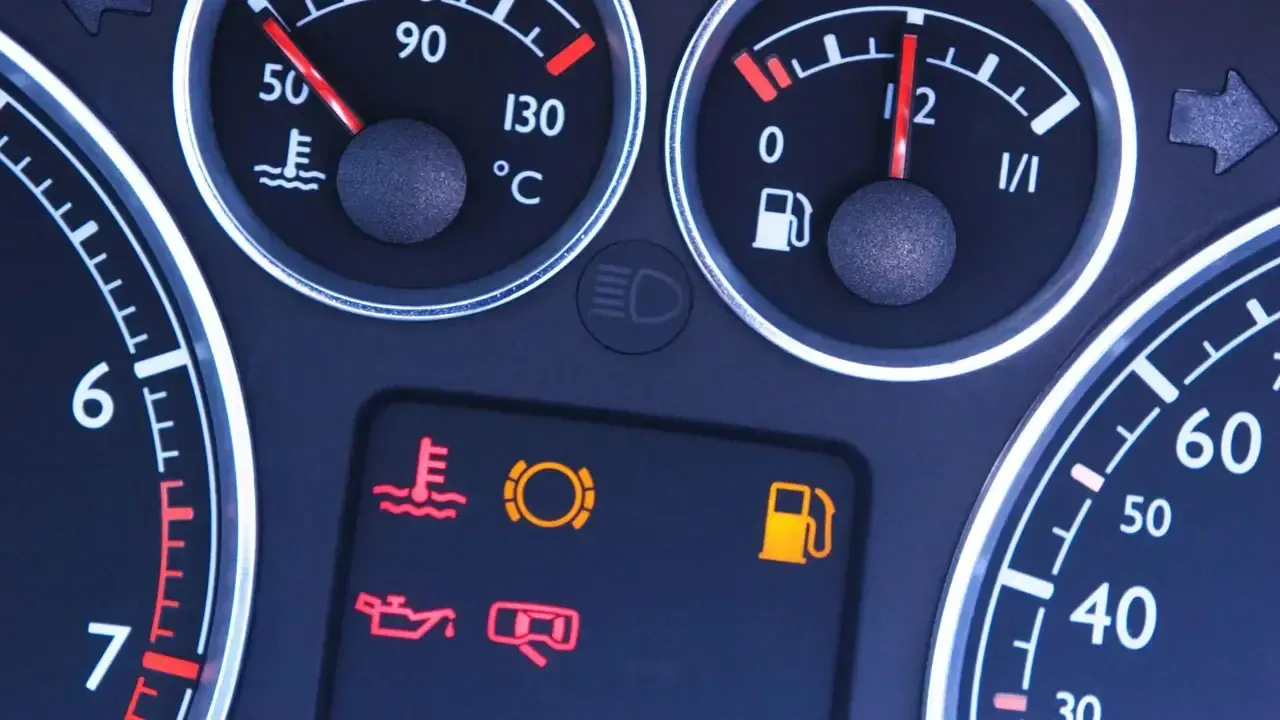
Flashing gear indicator and warning lamp
A flashing P R N D S display means the gearbox control unit has stored a fault and is protecting the gearbox. Do not simply clear the codes: save the complete fault list first. Our DQ200 fault code list explains what each code means and why many codes at once rarely mean many broken parts.
Only odd or only even gears
When the mechatronic detects a fault it cannot control safely, it switches off one sub-gearbox and the car keeps moving on the other half. With only 1-3-5-7 there is no reverse; with only 2-4-6-R the car pulls away in 2nd. The trigger can be a solenoid valve, a sensor or a pressure fault. Read DSG emergency mode: only odd or even gears for the full picture.
Delayed or harsh gear changes
If gear changes are slow or clunky, the hydraulic pressure is often the problem. On the DQ200, the original accumulator is attached to the mechatronic housing at a thin-walled point that cracks over time. The system can no longer hold its pressure, the gearbox stores codes such as P17BF, P189C and P1895, and in the end it may switch to emergency mode. Hydraulic leaks at the valve body plate and its seals can cause similar pressure problems.
Stuck in one gear or wrong gear selection
Solenoid valves can become clogged with metallic debris over time; they stick, and the gearbox struggles to select the correct gear or refuses to shift up or down. Cleaning and testing the solenoids often restores correct operation. However, metal in the hydraulic system can also point to wear inside the gearbox, so check before fitting any new parts: our metal-chip check shows how to tell a mechatronic fault from gearbox damage.
Sudden loss of drive
If the gearbox unexpectedly selects neutral, the mechatronic cannot use either sub-gearbox safely. The loss of drive may be temporary or complete. Drive no further than necessary and have the unit diagnosed, ideally with a bench test.
Diagnose first, then repair
A mechatronic failure used to mean a complete, costly replacement. Today, a structured diagnosis often avoids that cost:
- Read and save the fault memory with a VW Group compatible diagnostic tool before clearing anything.
- Look at the pattern of codes: pressure codes point to the hydraulics, electrical faults to solenoids, sensors or the electronics.
- Check for metal chips when the mechatronic is removed, so that a gearbox fault is not mistaken for a mechatronic fault.
- Bench-test the unit before and after the repair.
The FDY mechatronic test device runs a fully automated bench test: it measures the current of each solenoid, checks the pump and the pressure build-up, runs a leak test and a 1,000-shift simulation, and prints a report for the customer.
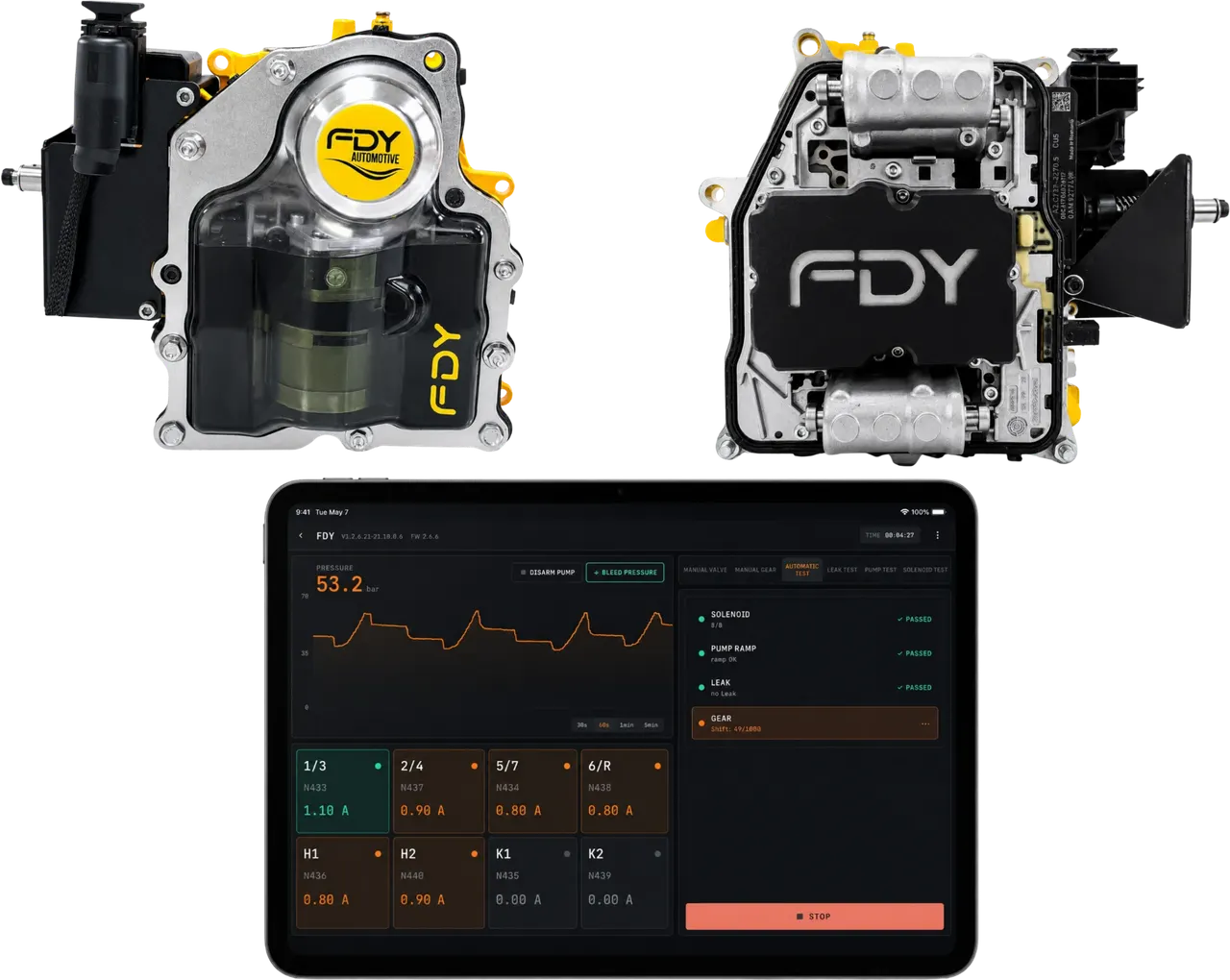
Repair the cause, not the whole unit
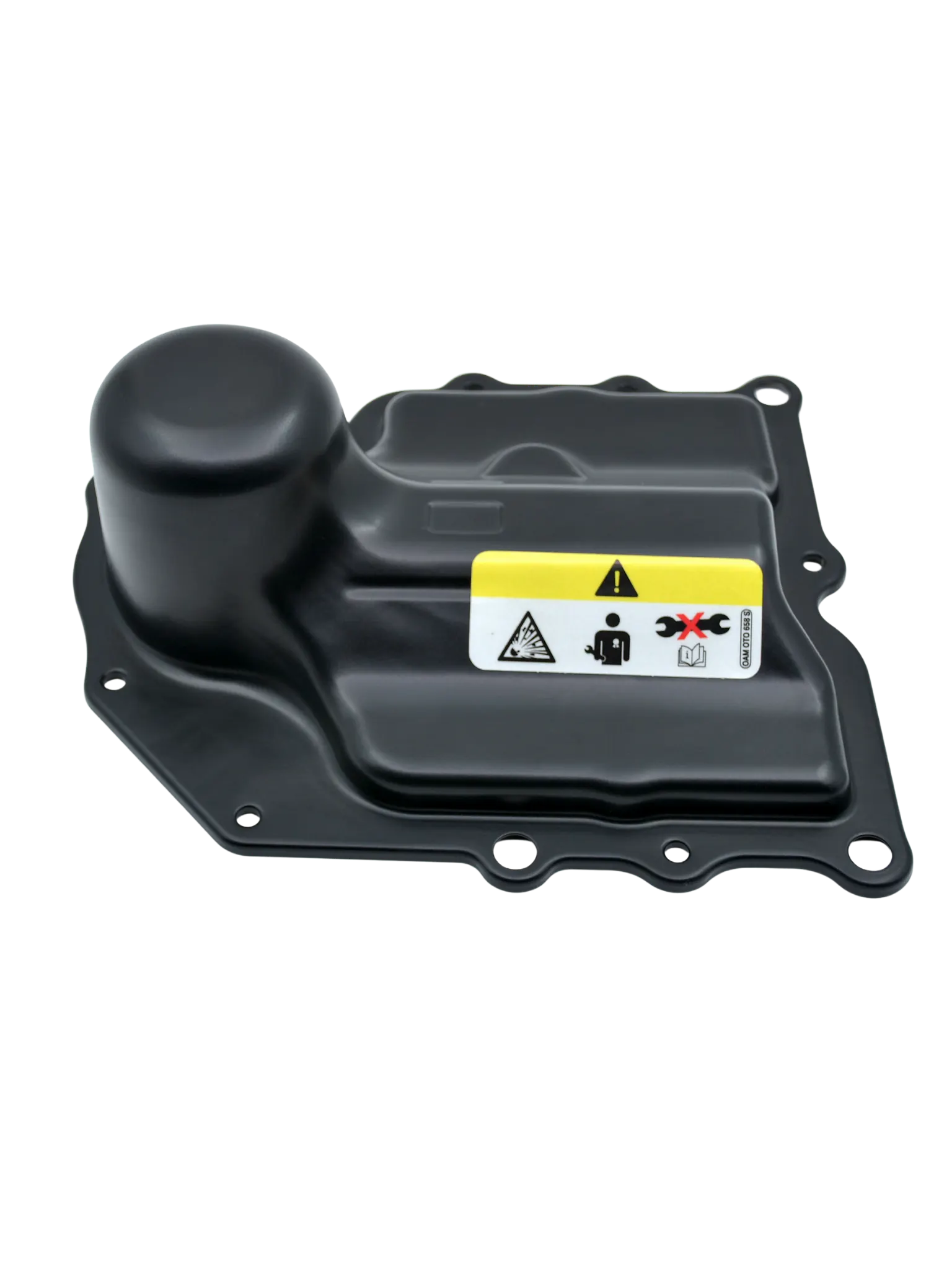
- Pressure loss: the FDY reinforced accumulator repair kit replaces the weak point with a double-wall, high-quality steel design. In most cases only the oil pan is removed, the mechatronic stays in the car and no programming is needed. It fits 0AM and 0CW gearboxes and is installed in more than 165,000 vehicles.
- Leaks and worn seals: the mechatronic overhaul repair kit brings 15 components (seals, gaskets, check balls and an oil filter) together to restore the hydraulic circuits.
- Sticking solenoids: the FDY Black Box cleans and tests 5 V and 12 V solenoids, four valves at a time, with pulse cleaning and proportional valve tests, controlled by an Android app.
- Uncertain faults: the test device confirms the diagnosis before any part is ordered and verifies the repair afterwards.
For general care topics such as fluid leaks, overheating and regular maintenance, see our overview of common issues and solutions for 7-speed DSG gearboxes. Questions about lifespan, reliability and oil changes are answered in our DQ200 DSG 7 FAQ.
Frequently asked questions
01What are the most common 7-speed DSG gearbox problems?+
Judder when pulling away, a flashing P R N D S display, delayed or harsh shifts, driving in only odd or only even gears, and sudden loss of drive. Most of these trace back to the mechatronic unit or the clutch.
02What causes delayed or harsh shifts on a DQ200?+
Most often a loss of hydraulic pressure caused by a cracked accumulator housing, recorded as P17BF, P189C or P1895. A reinforced accumulator repair kit fixes the root cause without replacing the mechatronic plate.
03Does a DSG problem always mean a new mechatronic?+
No. Pressure faults, sticking solenoids and leaking seals can be repaired individually. A proper diagnosis and a bench test show which part is really at fault.
04Can I keep driving with a DSG fault?+
Only gently and only as far as a workshop. Long periods with pressure loss or in emergency mode can spread the damage to the mechatronic and the clutch.
Talk to a DQ200 specialist
Send us the fault codes and a short description of the symptoms, and our engineers will tell you where to start. FDY supports workshops and distributors 24/7. Contact us.