Insights · 16 Oct 2026 · 4 min read
Mechatronic or Gearbox? The Metal-Chip Check Every DSG 7 Workshop Should Do First
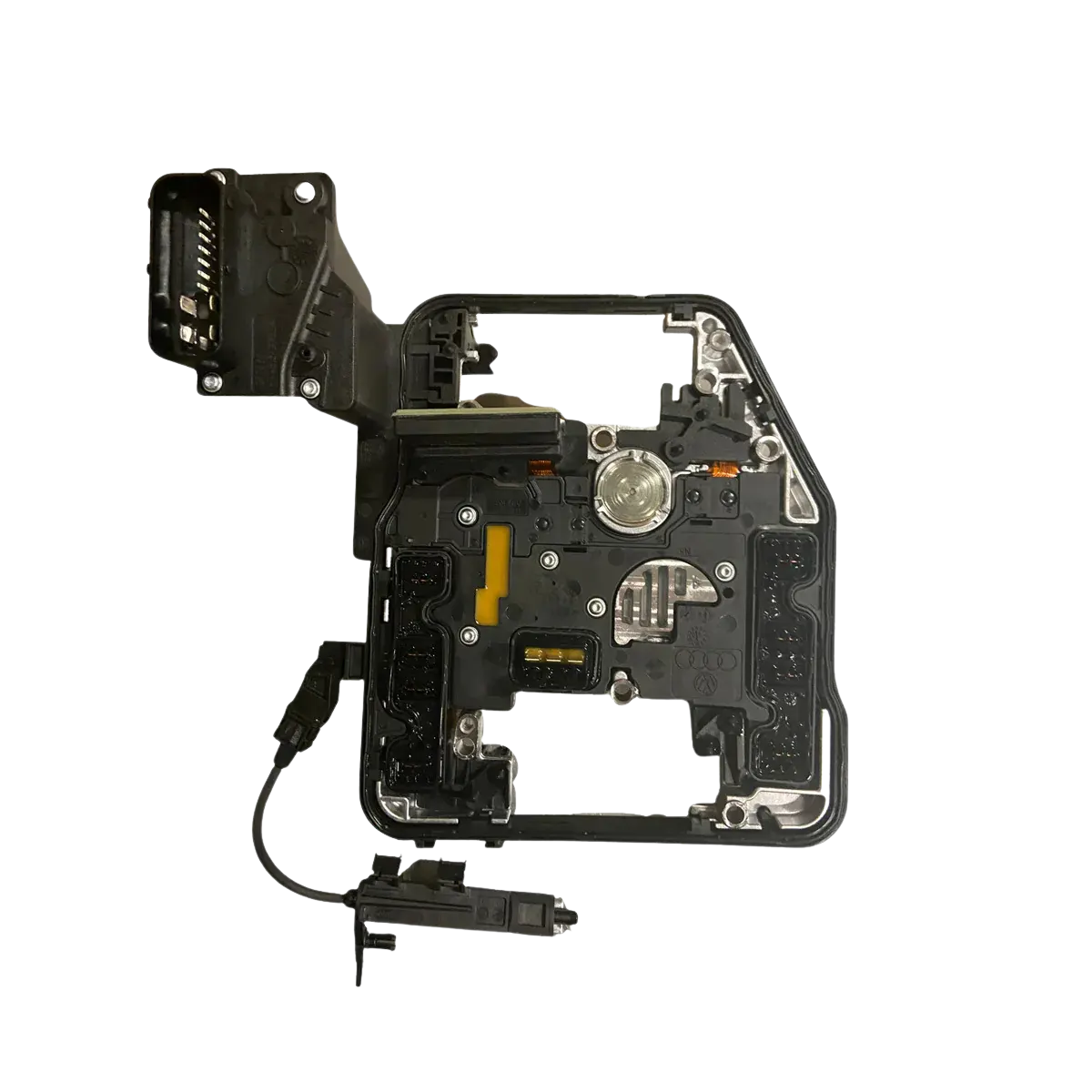
The mechatronic unit is one of the most expensive parts of a Volkswagen Group 7-speed DSG. Fitting a new one to a gearbox with damaged bearings is one of the most expensive mistakes a workshop can make: the fault returns, the customer comes back, and the new unit may already be contaminated with metal.
Volkswagen's own repair procedure for DQ200 mechatronic faults (TPI 2049002) contains a simple check that prevents exactly this. It takes a few minutes, needs no special tools, and it belongs in every mechatronic job — whether the car is a Golf, Polo, Octavia, Leon, A3 or Ibiza.
Step 1: Identify the unit before you order anything
Read the hardware part number and the software version of the mechatronic in address 0002 with a diagnostic tool, and order a replacement that matches the installed part number. The correct part depends on the platform and the equipment of the car — Volkswagen's bulletin, for example, specifies:
| Part number | Application |
|---|---|
| 0AM 927 769 D | PQ platform (for example Golf 6, Polo 6R, Jetta 6) |
| 0AM 927 769 G | MQB platform, without CAN wake-up |
| 0AM 927 769 K | MQB platform, with CAN wake-up |
Always confirm the part with the installed part number and the VIN. If neither the part number nor the software version can be read, the control unit is not communicating at all; Volkswagen's procedure is then to replace the mechatronic — but the next steps still apply. All variants are listed in DQ200 0AM 927 769 mechatronic variant codes.
Step 2: Remove the mechatronic correctly
Follow the workshop manual: the gearbox has to be put into neutral manually before the mechatronic comes out. Work clean. The DQ200 mechatronic has its own hydraulic oil circuit, separate from the gear oil, and any dirt that gets in will end up in the solenoid valves.
Step 3: Inspect the gear actuator magnets
With the mechatronic removed, look at the magnets of the gear actuators. Their job is to give the travel sensors a position signal, but they also work as chip collectors: steel wear from inside the gearbox ends up on them.
- A thin, even film of fine particles is normal wear. There is no sign of bearing damage: continue with the mechatronic repair or replacement.
- Clumps, flakes or visible chips are not normal. They point to bearing damage inside the gearbox. Do not fit a mechatronic: the gearbox has to be repaired or replaced first, otherwise the new unit will fail too — and may be blamed for it.
Take a photo of the magnets for the job file. If there is a warranty question later, it is the best evidence you will have.
Step 4: Fit the unit with the right parts
A mechatronic replacement is more than a handful of bolts. Plan to renew:
- the self-locking bolts and mechatronic screws listed in the parts catalogue,
- the O-ring of the pressure accumulator,
- the central hydraulic oil (VW G 004 000), topped up to specification,
- the gearbox breather cap, if it is damaged or missing.
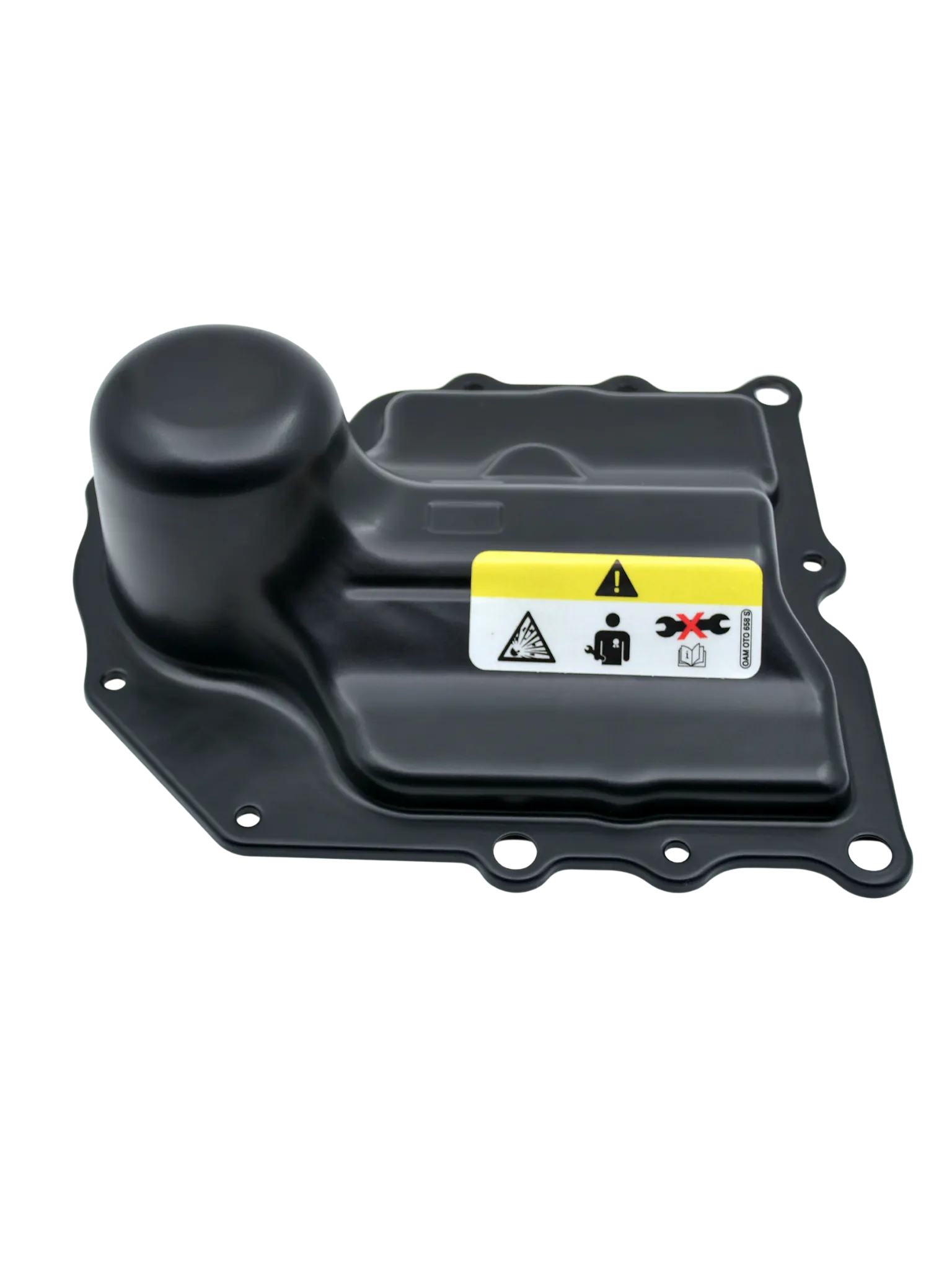
Our mechatronic overhaul repair kit brings the seals, gaskets, check balls and oil filter together in one box, and a new cover and pan gasket keeps the unit sealed.
Step 5: Flash and adapt it safely
After fitting, the software of the mechatronic has to be updated or adapted with the diagnostic tester. An interrupted flash can disable a brand-new control unit, so it pays to follow Volkswagen's conditions to the letter:
- Connect a battery charger — never flash on battery power alone.
- Switch off every unnecessary consumer: ventilation, seat heating, interior and exterior lights.
- Keep mobile phones and other wireless devices away from the car.
- Connect the diagnostic interface to the car by cable (USB mode, not Bluetooth or Wi-Fi), and connect the tester to the workshop network by cable as well.
- Keep the driver's door open during the update.
- Switch on the hazard warning lights to keep the CAN data bus continuously active.
Then run the basic settings as guided by the tester and finish with a road test.
The smarter path: repair and verify
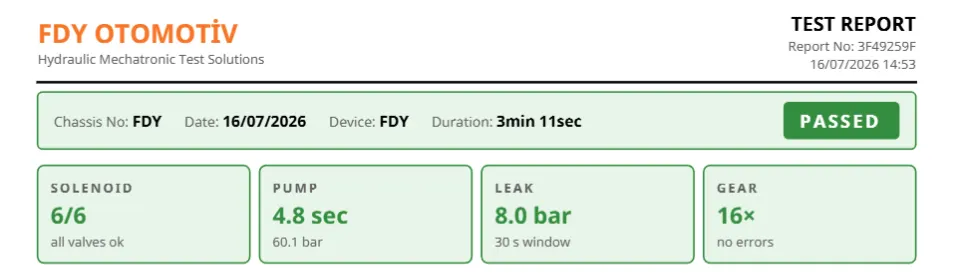
Not every mechatronic fault needs a new mechatronic. A cracked accumulator housing — the most common DQ200 failure — is solved with the FDY reinforced accumulator repair kit. A repaired or second-hand unit can be verified on the FDY mechatronic test device before it goes into the car: solenoid currents, pump performance, pressure hold and a 1,000-shift simulation, with a printable test report for your customer.
Frequently asked questions
01How do I know whether I need a new mechatronic or a new DSG gearbox?+
Remove the mechatronic and inspect the gear actuator magnets. A thin, even layer of fine particles is normal; clumps or visible chips indicate bearing damage, and then the gearbox must be repaired or replaced before any mechatronic is fitted.
02Can I fit a used DQ200 mechatronic?+
Only one with the same part number as the original, and ideally after a bench test. A software update and the basic settings are still required after fitting.
03Does a new mechatronic need to be programmed?+
Yes: it needs a software update or adaptation and the basic settings with a diagnostic tester. Follow the safe-flashing conditions above — battery charger connected, consumers off, cable connections only.
04Which oil does the DQ200 mechatronic use?+
Its own central hydraulic oil (VW G 004 000), in a circuit separate from the gear oil. Top it up to specification whenever the mechatronic has been removed.
Need a second opinion?
Send us the part number, the fault codes and a photo of the magnets. Our engineers support workshops and distributors 24/7 — contact us.