Insights · 16 Oct 2026 · 6 min read
DSG Emergency Mode: Why Your VW, Audi, Seat or Škoda Only Drives in Odd or Even Gears
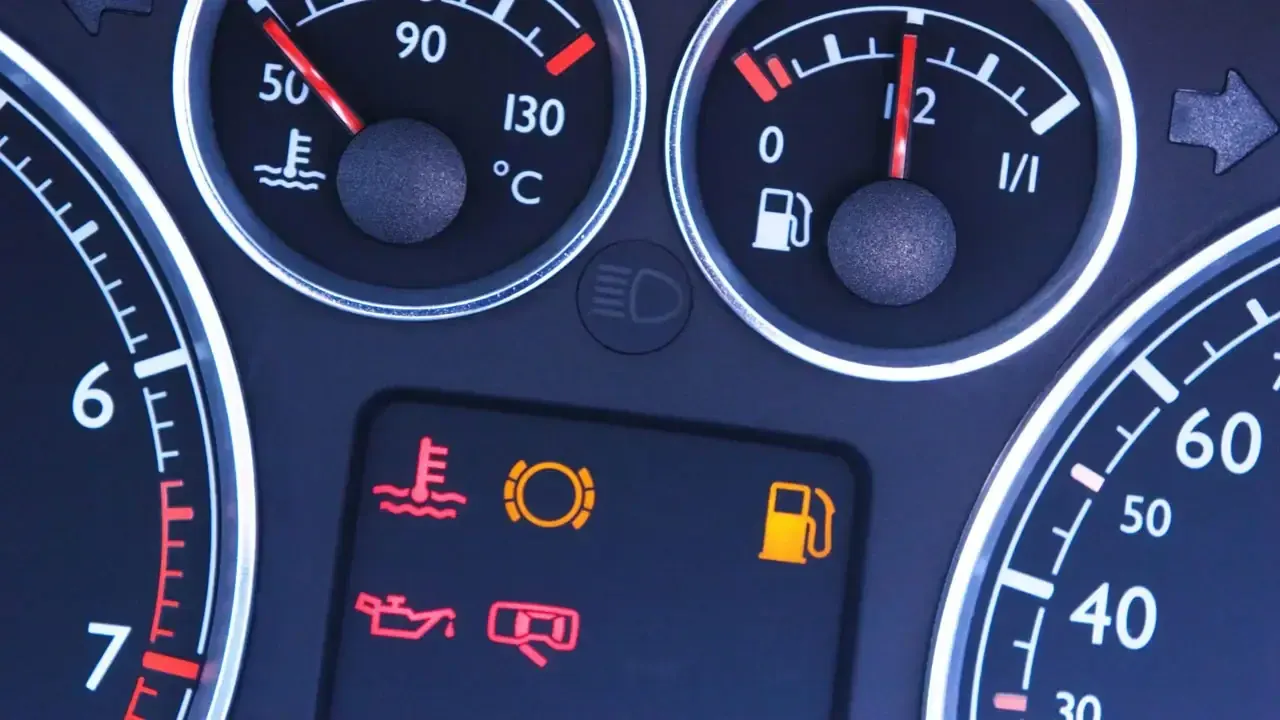
You are driving your Golf, Octavia, Leon or A3 when the gearbox warning lamp comes on, the gear indicator starts flashing and the car pulls away in third. Or it refuses to select reverse. Or it holds one gear and then drops into neutral. This is DSG emergency mode — one of the most common complaints across the Volkswagen Group 7-speed DSG range, and one of the most misunderstood.
The good news: emergency mode does not mean the gearbox is dying. It means the gearbox is protecting itself. Understanding why it happens is the fastest way to a correct — and affordable — repair.
Which cars are affected?
Every Volkswagen Group car with the 7-speed dry-clutch DSG, the DQ200 (gearbox codes 0AM and 0CW). That covers small and compact models from four brands — among them the Volkswagen Polo, Golf, Jetta, Passat, Touran and Scirocco, the Audi A1 and A3, the Seat Ibiza and Leon, and the Škoda Fabia, Rapid and Octavia. The full list is on our supported vehicle models page.
What is DSG emergency mode?
A dual-clutch gearbox is really two gearboxes in one housing. In the DQ200, sub-gearbox 1 carries gears 1, 3, 5 and 7 and is driven by clutch K1; sub-gearbox 2 carries gears 2, 4, 6 and reverse and is driven by clutch K2. While you drive in one gear, the other half already has the next gear pre-selected — that is what makes DSG shifts so fast.
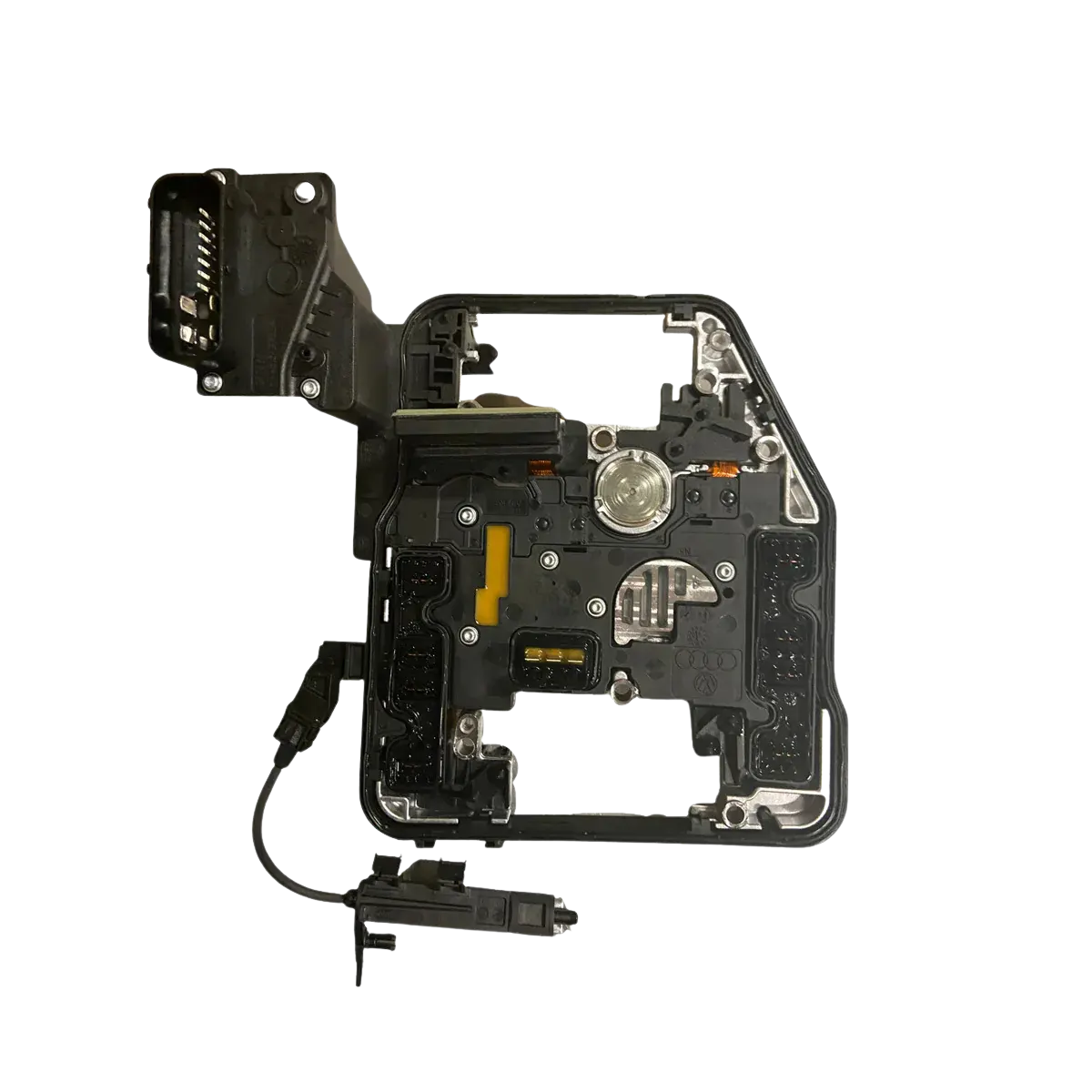
When the mechatronic unit — the electro-hydraulic brain of the gearbox — detects a fault it cannot control safely, it switches off the affected half. The car keeps moving on the healthy half only. That is emergency mode, often called limp mode:
- Only 1-3-5-7 are available: no 2nd, 4th or 6th gear — and no reverse.
- Only 2-4-6-R are available: the car pulls away sluggishly in 2nd, but reverse still works.
- In severe cases the gearbox cannot use either half and selects neutral: no drive at all.
The symptoms drivers notice
Volkswagen's own technical bulletin for this complaint (TPI 2049002) describes three symptoms that appear alone or together:
- The gearbox warning lamp lights up in the instrument cluster.
- The gear indicator (P R N D S) in the instrument display flashes.
- The gearbox is in emergency mode and only shifts through 1-3-5-7 or 2-4-6-R.
Many drivers also find that switching the engine off and on brings every gear back — for a while. The restart clears the active state, but the entry in the fault memory stays, and so does the cause.
What actually triggers it
Behind the warning lamp there is always at least one entry in the fault memory of the gearbox control unit (diagnostic address 0002, transmission electronics). Across the VW Group, the triggers fall into five families.
Supply voltage
The mechatronic needs a stable supply. A weak battery, a corroded ground strap or a poor connector can log P056200 – supply voltage too low and P177F00 – hydraulic pump motor, undervoltage. Rule these out first: they are the cheapest fix, and they can make a healthy mechatronic look broken.
Sensors
The travel sensors of the four gear actuators, the two clutch position sensors, three input speed sensors, a hydraulic pressure sensor and an internal temperature sensor all report to the electronic module of the mechatronic. One faulty signal is enough to shut a sub-gearbox down.
Solenoid valves
Eight solenoid valves (N433–N440) move the gear actuators and control both clutches. An electrical fault on one valve takes its sub-gearbox offline — exactly the odd-or-even pattern drivers report.
Hydraulic pressure
If the electric pump cannot build or hold pressure — most often because the pressure accumulator housing has cracked — the gearbox stores pressure faults such as P17BF and P189C and protects itself. We explain these in common DQ200 mechatronic error codes.
Plausibility errors
Codes such as P072600 – engine speed signal implausible, P177900 – input shaft 1 overspeed or P172700 – driving direction implausible mean the control unit is receiving values that cannot all be true at the same time. Sometimes the cause is mechanical; very often it is a failing control unit.
For every code and what it points to, see our companion guide: the complete DQ200 fault code list.
Is it safe to keep driving?
Emergency mode is designed to get you off the road, not to be driven for weeks. Pulling away in 2nd or 3rd makes the clutch slip longer and run hotter, and a mechatronic repair can turn into a clutch job as well. With only 1-3-5-7 you also have no reverse, so plan where you park. Drive gently to a workshop and avoid hills, towing and stop-and-go traffic.
What a good workshop does next
- Reads the fault memory in address 0002 with a VW Group compatible diagnostic tool and saves the freeze-frame data before clearing anything.
- Checks the battery, charging voltage, ground connections and the mechatronic connector before condemning any part.
- Reads the part number and software version of the mechatronic. If neither can be read, the control unit is not communicating, and Volkswagen's procedure is to replace the mechatronic.
- Looks at the pattern, not the count. Twenty fault codes rarely mean twenty broken parts — our fault code guide explains why.
- Checks the gearbox before replacing the mechatronic: once the unit is out, the gear actuator magnets show whether the gearbox has bearing damage. We describe this step by step in Mechatronic or gearbox?
Repair, don't just replace
A new mechatronic is one of the most expensive parts of the car, and in many cases it is not needed. Pressure faults are usually solved for good with a reinforced accumulator repair kit. Solenoid valves can be tested and cleaned with the FDY Black Box. And with the FDY mechatronic test device, a workshop can bench-test the complete unit — pump, pressure, leak tightness, solenoid currents and a 1,000-shift simulation — before it goes back into the car.
Frequently asked questions
01Why does my DSG only drive in 1st, 3rd, 5th and 7th gear?+
The mechatronic has switched off sub-gearbox 2 (gears 2, 4, 6 and reverse) after detecting a fault there — typically a solenoid valve, a sensor or a pressure problem. The car stays drivable on the other half.
02Why is the gear indicator flashing on my VW, Audi, Seat or Škoda?+
A flashing P R N D S display means the gearbox control unit has stored a fault and is running in emergency mode. Have the fault memory read as soon as possible.
03Can a weak battery put a DSG into emergency mode?+
Yes. Low supply voltage can store P056200 and an undervoltage fault for the hydraulic pump motor (P177F00). Check the battery and ground connections before replacing any gearbox part.
04Will clearing the fault codes fix it?+
Only temporarily. Clearing the memory turns the warning off, but if the cause is still there the gearbox will return to emergency mode — often on the next drive.
05Does DSG emergency mode always mean a new mechatronic?+
No. Voltage problems, a cracked accumulator housing or a single solenoid valve can all trigger it. A proper diagnosis and a bench test often save the cost of a complete unit.
Talk to a DQ200 specialist
Send us the fault codes from your diagnostic tool and our engineers will tell you where to start. FDY supports workshops and distributors 24/7 — contact us.