On this page+
“Do I need to run a basic setting after replacing the accumulator?” It is one of the questions workshops ask us most often after fitting the FDY reinforced accumulator. The short answer: no — and on some cars it is better not to. This article explains why, when a basic setting is still the right step, how to carry it out safely if you need it, what to do if the gearbox engages harshly afterwards, and what to check after an accumulator replacement.
What the basic setting learns — and what the accumulator does
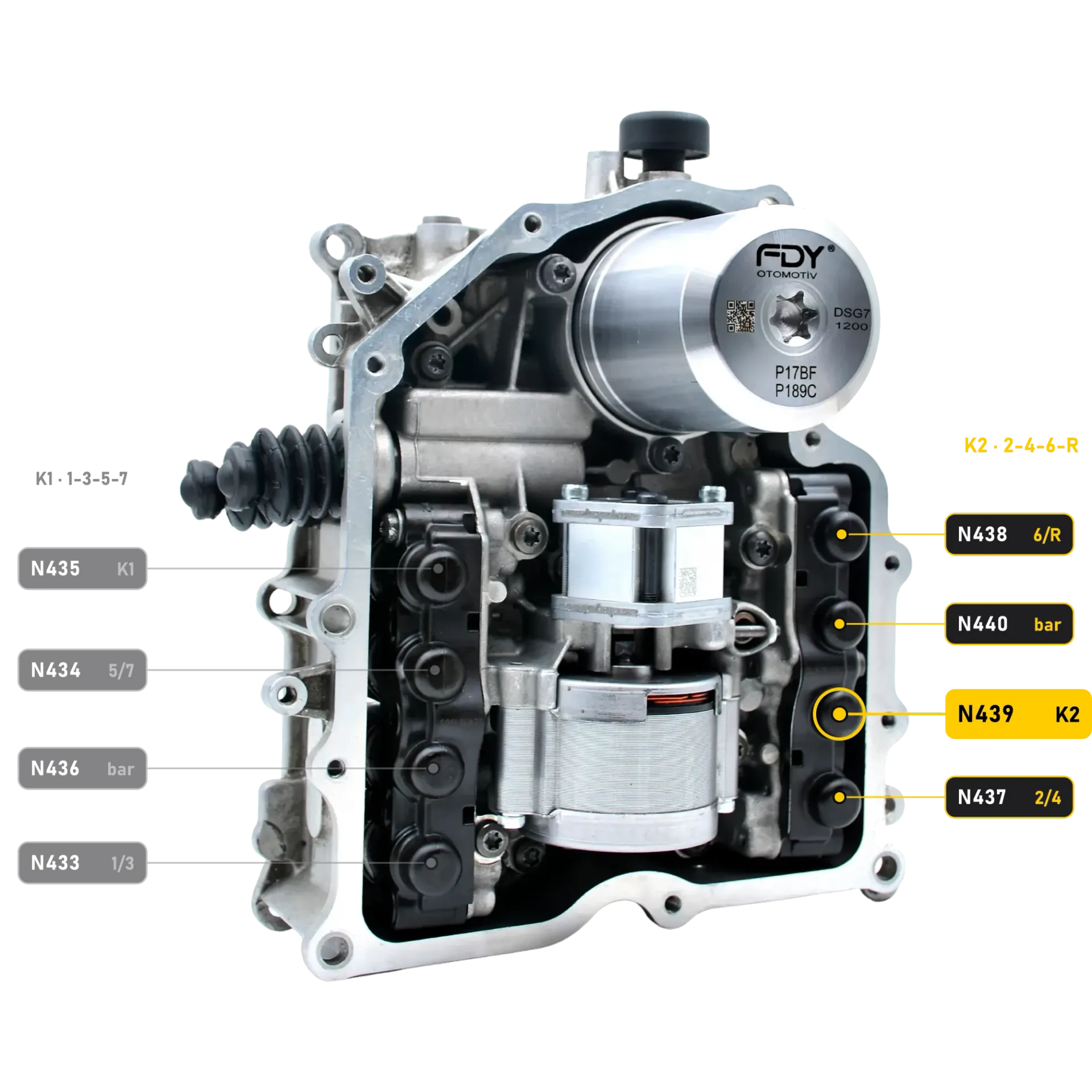
The basic setting teaches the gearbox control unit (TCU) where its moving parts are: the end and neutral positions of the four gear actuators and the kiss points of clutches K1 and K2. Our DQ200 basic settings guide explains the procedure step by step.
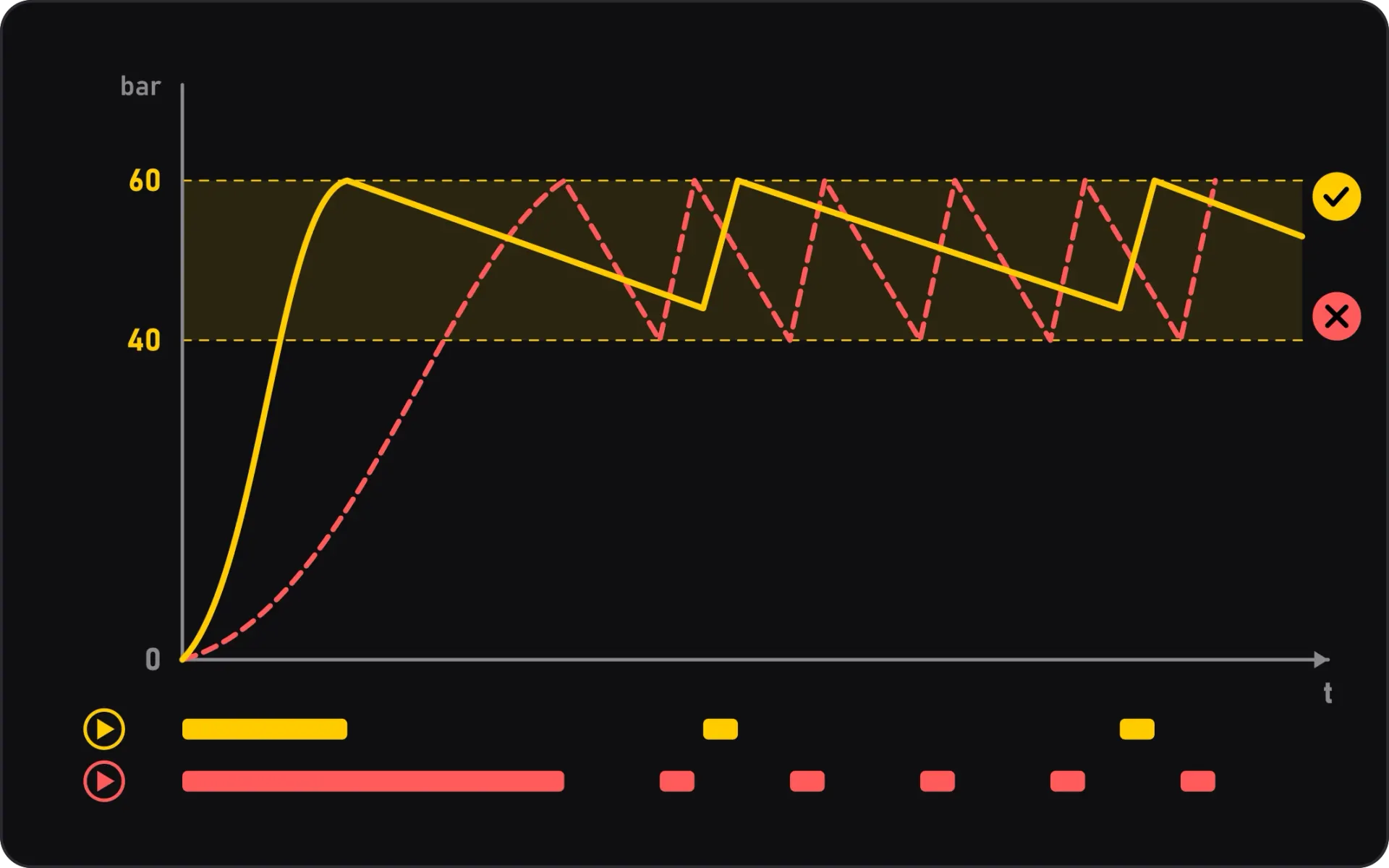
The pressure accumulator has nothing to do with these positions. It stores the oil pressure that the pump produces. The TCU does not learn the accumulator: it reads the system pressure live through its pressure sensor and switches the pump on and off to keep it in the working range of roughly 40–60 bar. When a leaking accumulator mounting is repaired, the pressure simply stays where it belongs — none of the learned values change.
That is why no programming and no basic setting are needed after fitting the FDY reinforced accumulator. In most cases only the oil pan is removed and the mechatronic stays in the car, so the gear actuators and the clutches are not touched at all.
Which jobs need a basic setting?
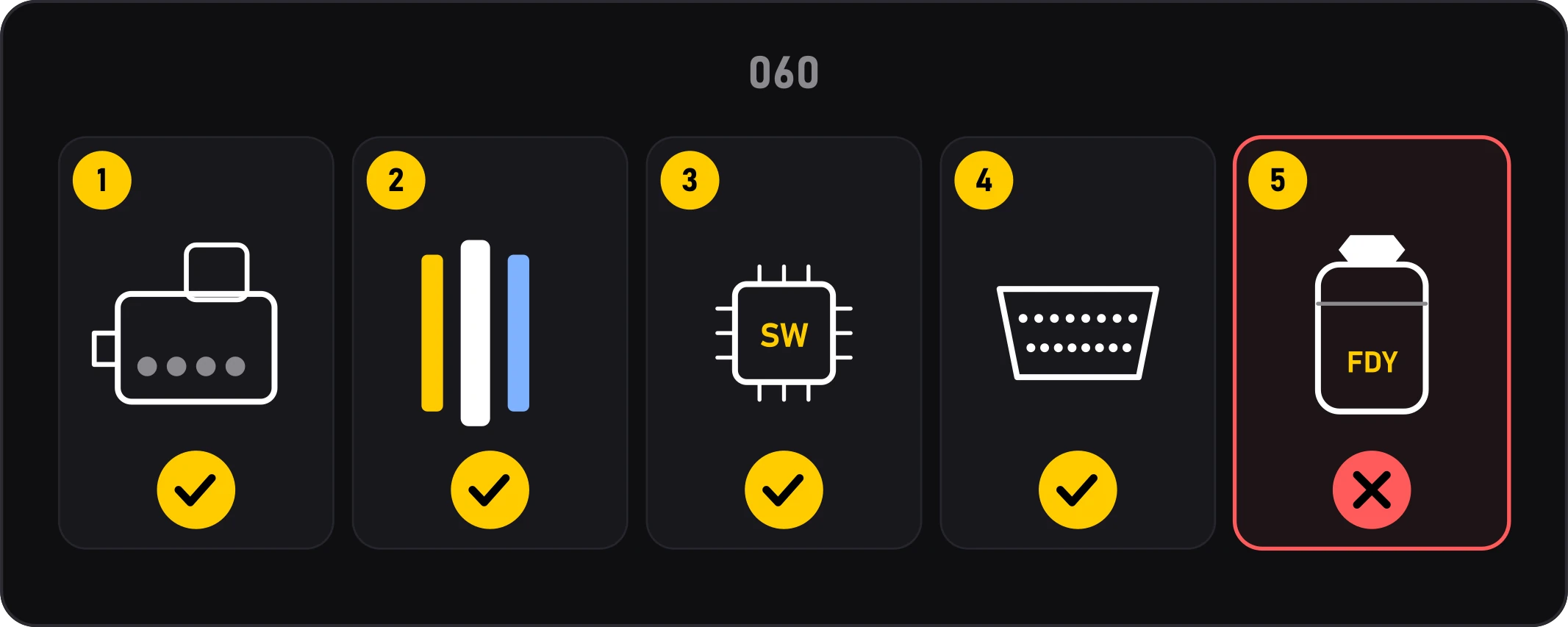
- Mechatronic replaced or repaired: yes — the positions of a different unit are unknown to the TCU.
- Dual clutch replaced: yes — the new clutch has new kiss points.
- Gearbox software updated or adapted: yes.
- The fault memory says the basic setting has not been carried out: yes.
- Only the pressure accumulator replaced, mechatronic left in the car: no.
Why a basic setting can backfire after an accumulator job
Experienced DQ200 workshops know this situation well. A car comes in with a pressure fault. The accumulator is replaced and the fault is gone — and then a basic setting is run “to be on the safe side”. The car has covered many kilometres and its clutch is worn, but until that day it shifted well, because the TCU had followed the wear step by step and adapted its values.
The basic setting throws these adapted values away and measures the kiss points from scratch. If the clutch is at the edge of its tolerance, the measurement fails: the procedure stops at the clutch step, the car knocks when D is selected and the gearbox may go into emergency mode. To the customer it looks as if the accumulator repair caused the problem — although the real cause is a clutch that was already at its limit.
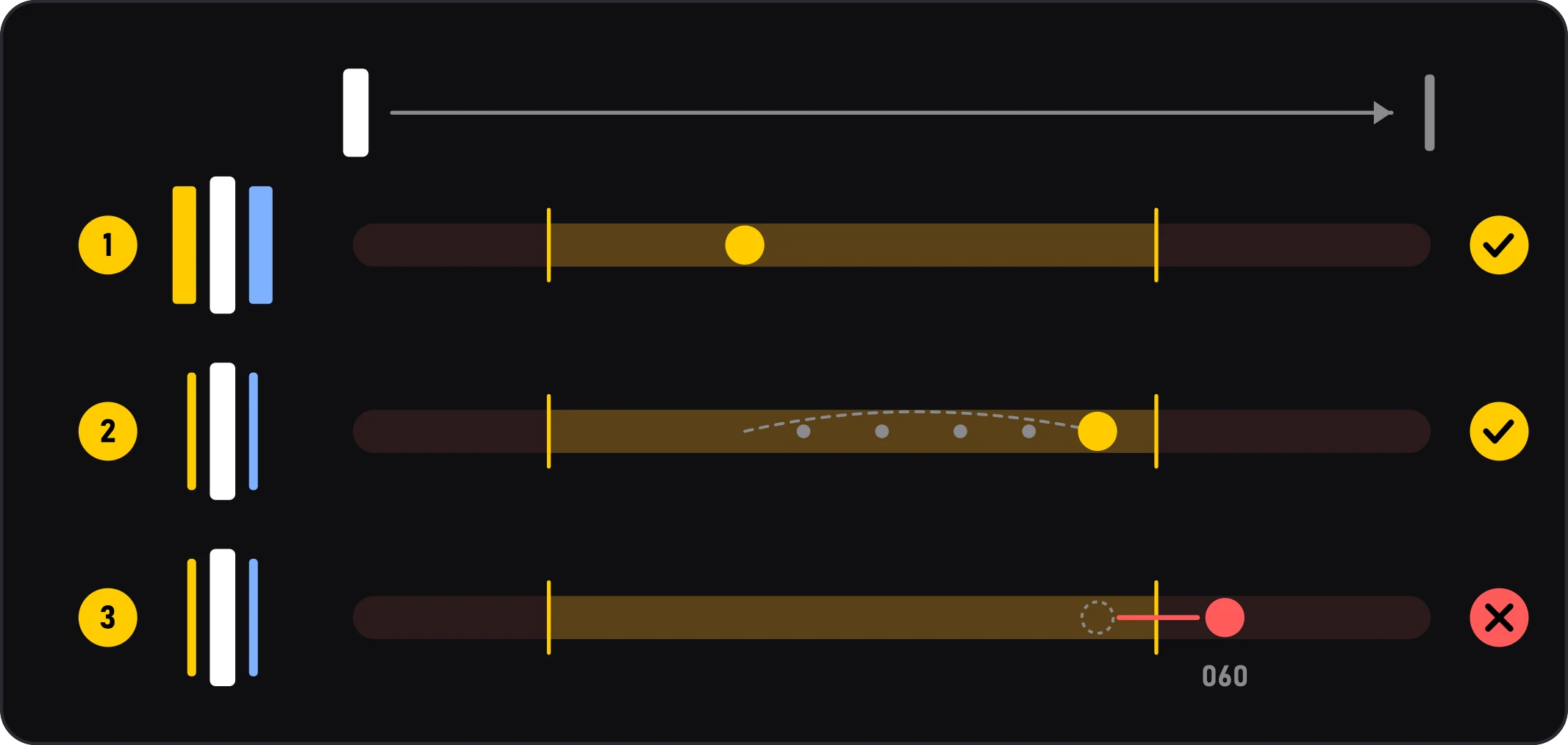
- New clutch: the kiss point sits comfortably inside the tolerance range.
- Worn clutch with adapted values: close to the limit, but still inside. The TCU has followed the wear gradually, and the car drives well.
- Worn clutch after a basic setting: the kiss point is measured again from scratch, ends up at or beyond the limit, and the basic setting is aborted — the old adapted values are already gone.
Our recommendation for workshops
- After an accumulator replacement on its own, do not run a basic setting. The pressure is read live; there is nothing to relearn.
- If a basic setting is needed for another reason, tell the customer beforehand that on a car with a worn clutch it can stop halfway, and that the clutch may then have to be replaced. Note this on the job card.
- Before a basic setting on a high-mileage car, check the clutch: judder when pulling away, slipping, and the clutch values in the live data.
If a basic setting is needed: step by step
When a basic setting is required — after a mechatronic or clutch replacement, for example — this sequence is used on diagnostic tools that work with basic setting groups. The full list of conditions is in our basic settings guide.
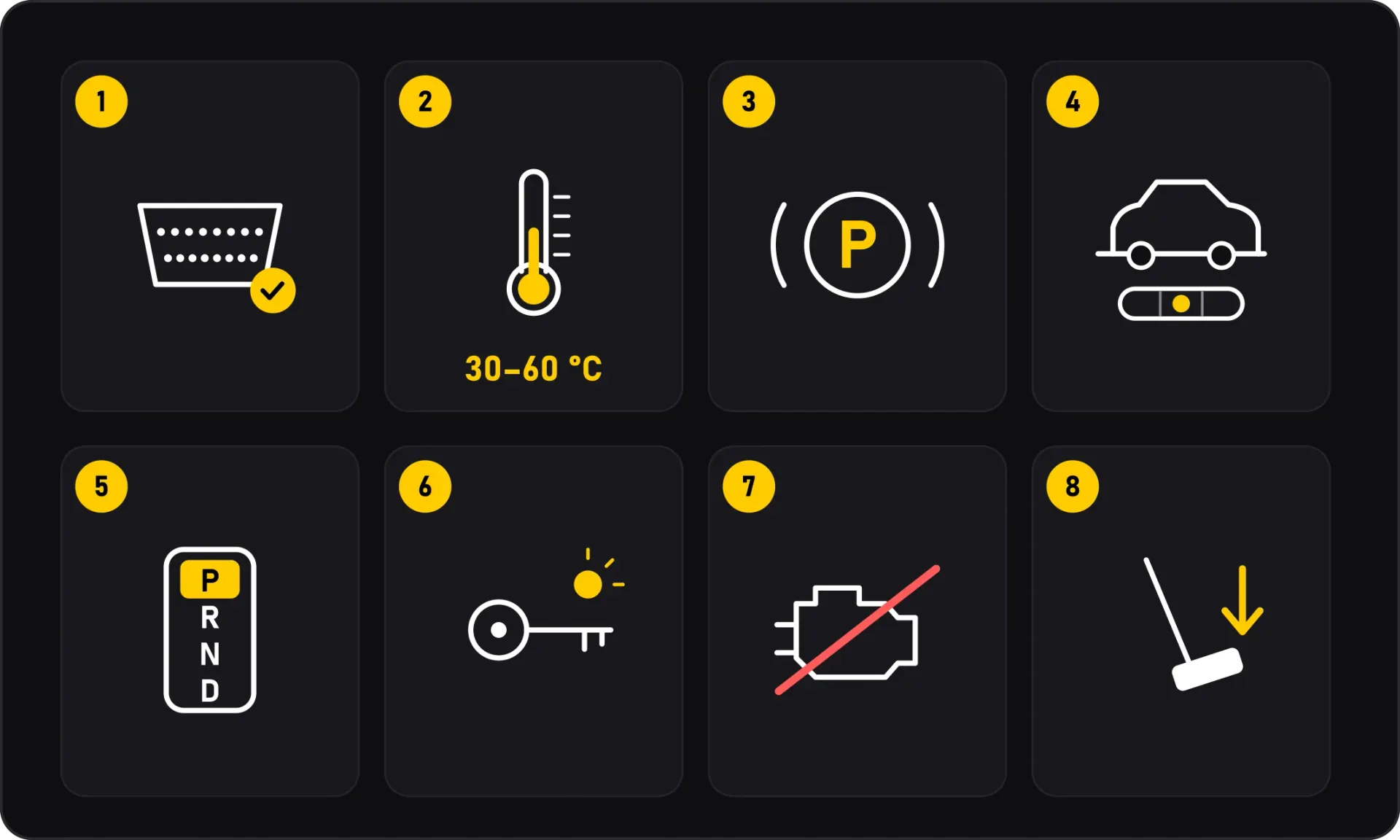
- Connect a battery charger. The pump runs several times, and low voltage is a common reason for an abort.
- Prepare the car: gearbox oil at the temperature your diagnostic tool requires, car standing still with the engine off, selector in P, parking brake applied and the brake pedal pressed.
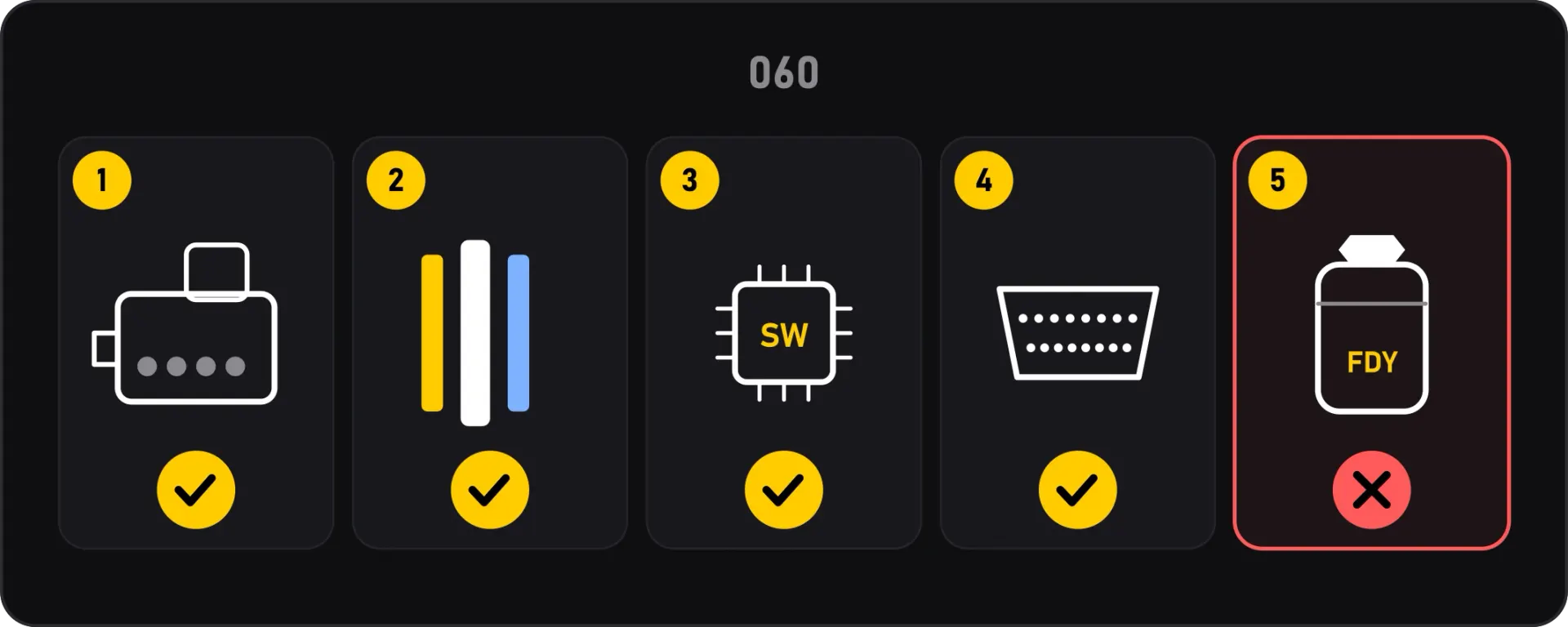
- Open the gearbox electronics, go to the basic settings and enter group 060.
- Watch the status values: 253 means the basic setting has started; 4 asks you to start the engine — keep the brake pressed while the clutches are learned; 254 means it was completed successfully; 255 means it was interrupted.
- After 254, switch the ignition off and remove the key for about 3 seconds. Then read the fault memory.
The status values can differ slightly between software versions and diagnostic tools; follow the messages of your tool.
After the basic setting: the learning drive
The basic setting gives the TCU its starting values; the learning drive refines them. This sequence works well in practice:
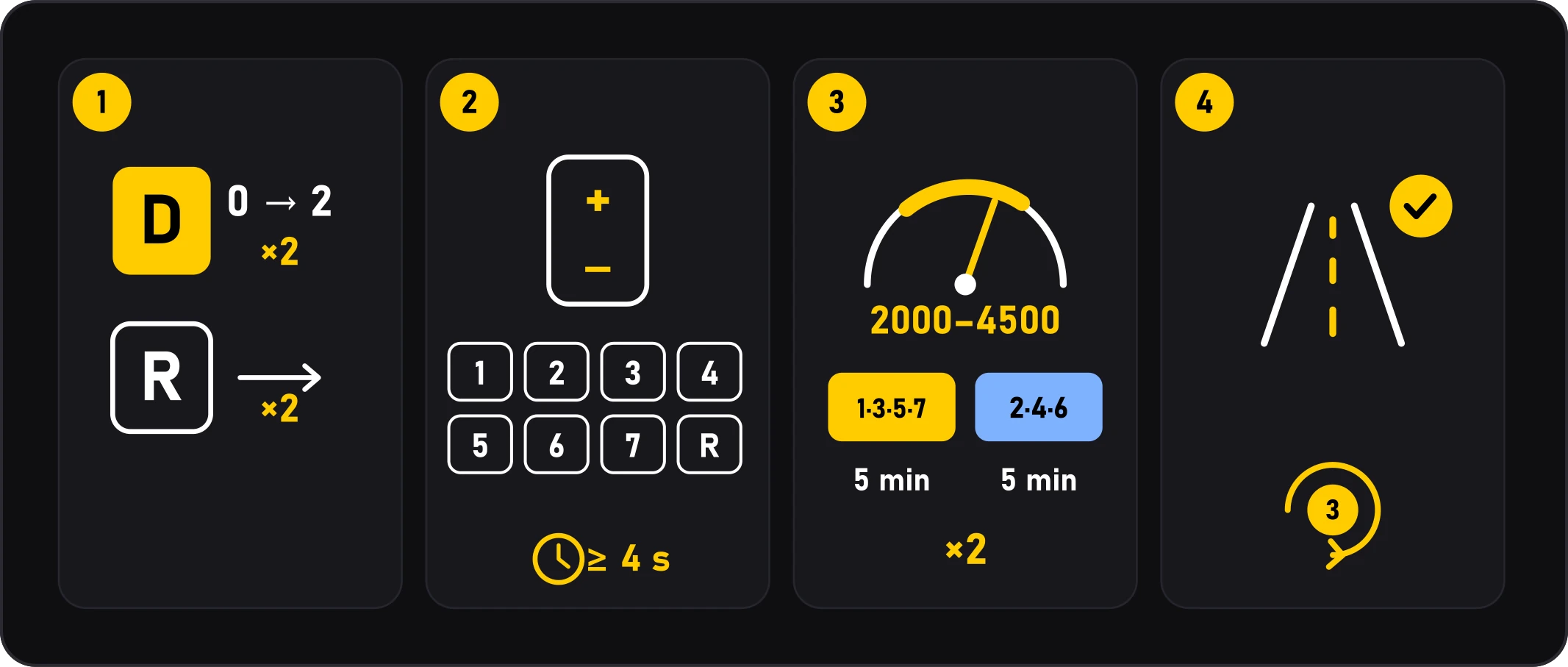
- Pull-aways in D and R: in D, pull away from a standstill and drive up into 2nd gear — twice. In R, drive a few metres — twice.
- Every gear in Tiptronic: drive in every gear, including reverse, for at least 4 seconds each.
- Odd and even gears at 2,000–4,500 rpm: in Tiptronic, drive for 5 minutes in an odd gear and then for 5 minutes in an even gear in this speed range — twice. Then drive with varied acceleration, including one full-throttle acceleration where it is safe and legal.
- Normal road test: drive normally and check the fault memory. If harsh shifts or jerks remain, repeat step 3.
To check the result, open the live data of the gearbox and look at value groups 180/1 and 200/1. They show the clutch adaptations of K1 and K2; after a successful learning drive both should read 3 or more.
Harsh engagement after a basic setting: what to do
If the car knocks when you select D after a basic setting, the TCU has usually reported that a clutch kiss point is beyond its tolerance. Two steps help:
- Repeat the basic setting. Workshops with a lot of DQ200 experience run group 060 up to three times in a row, then group 095 once, and finish with the learning drive above. Group numbers and their functions can differ between diagnostic tools and software versions — check what a group does in your tool before you run it.
- Check the clutch. If the basic setting keeps stopping at the clutch step, the clutch is at the end of its life. No software step can fix a worn clutch: it has to be replaced, followed by a new basic setting. Our article on the DQ200 dual clutch explains what to check.
After fitting a pressure accumulator: checklist
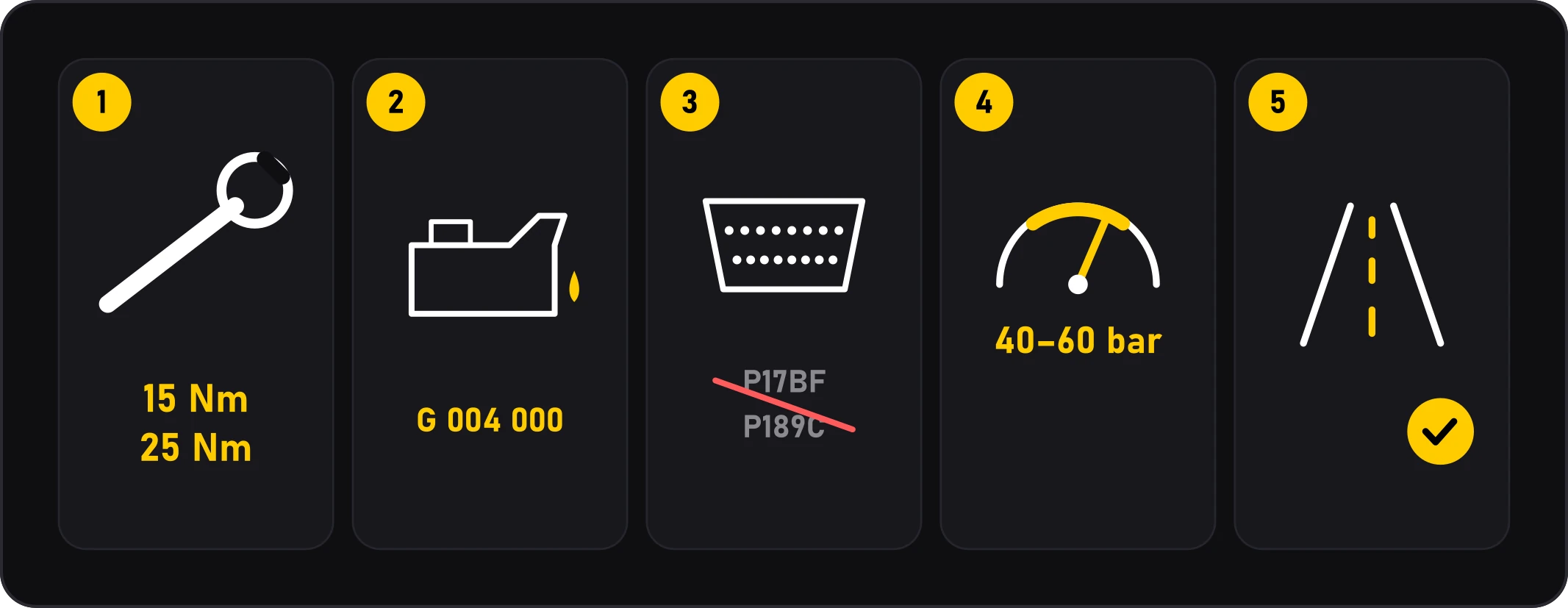
- Torque: tighten the three cover screws evenly to 15 Nm and the FDY accumulator to 25 Nm.
- Hydraulic oil: bring the mechatronic hydraulic oil (central hydraulic oil VW G 004 000) to the correct level. Low oil means low pressure and harsh shifts.
- Fault memory: read and clear the stored pressure faults such as P17BF and P189C.
- Pressure build-up: switch the ignition on and listen. The pump should fill the system within a few seconds and then stop. In the live data, the system pressure should settle in the range of roughly 40–60 bar and hold while the car is standing.
- Road test: drive through all gears. Shift problems caused by the pressure loss should be gone, and the gearbox keeps refining its values during normal driving. No programming and no basic setting are needed.
If the pressure still drops or the pump keeps running, the leak is somewhere else — in the valve body or at a valve. The FDY mechatronic test device finds it on the bench. Our article on delayed engagement after starting explains the symptoms of pressure loss.
Frequently asked questions
01Is a basic setting needed after replacing the DQ200 pressure accumulator?+
No. The accumulator only stores pressure, and the TCU reads the pressure live. The gear actuator positions and the clutch kiss points do not change when only the accumulator is replaced.
02Can a basic setting cause problems after an accumulator replacement?+
On a car with a worn clutch, yes. The basic setting measures the kiss points from scratch and can stop at the clutch step. The car may then knock when D is selected or go into emergency mode until the clutch is replaced.
03Does the FDY reinforced accumulator need programming?+
No — neither before nor after fitting, and no basic setting either.
04The car knocks when I select D after a basic setting — what now?+
Repeat the basic setting and do the learning drive. If it keeps stopping at the clutch step, the clutch is worn and has to be replaced.
05How long does the learning drive take?+
Plan about half an hour: the 5-minute runs in odd and even gears are done twice, plus the pull-aways, all gears in Tiptronic and a normal road test.
Talk to a DQ200 specialist
Not sure whether a basic setting is needed on your car? Send us the job you have done and your fault codes, and our engineers will tell you. FDY supports workshops and distributors 24/7 — contact us.