On this page+
The mechatronic is fitted, the bolts are torqued, the oil is filled — and the car will not pull away, or it engages so harshly that it shakes the whole car. In most cases nothing is broken. The gearbox simply has not been taught where its clutches and gear actuators are. That teaching step is the basic setting, and on the 7-speed DQ200 DSG it is not optional.
This guide explains when the basic setting is needed, which conditions must be met before you start, what happens during the procedure and why it sometimes stops halfway.
What the basic setting does
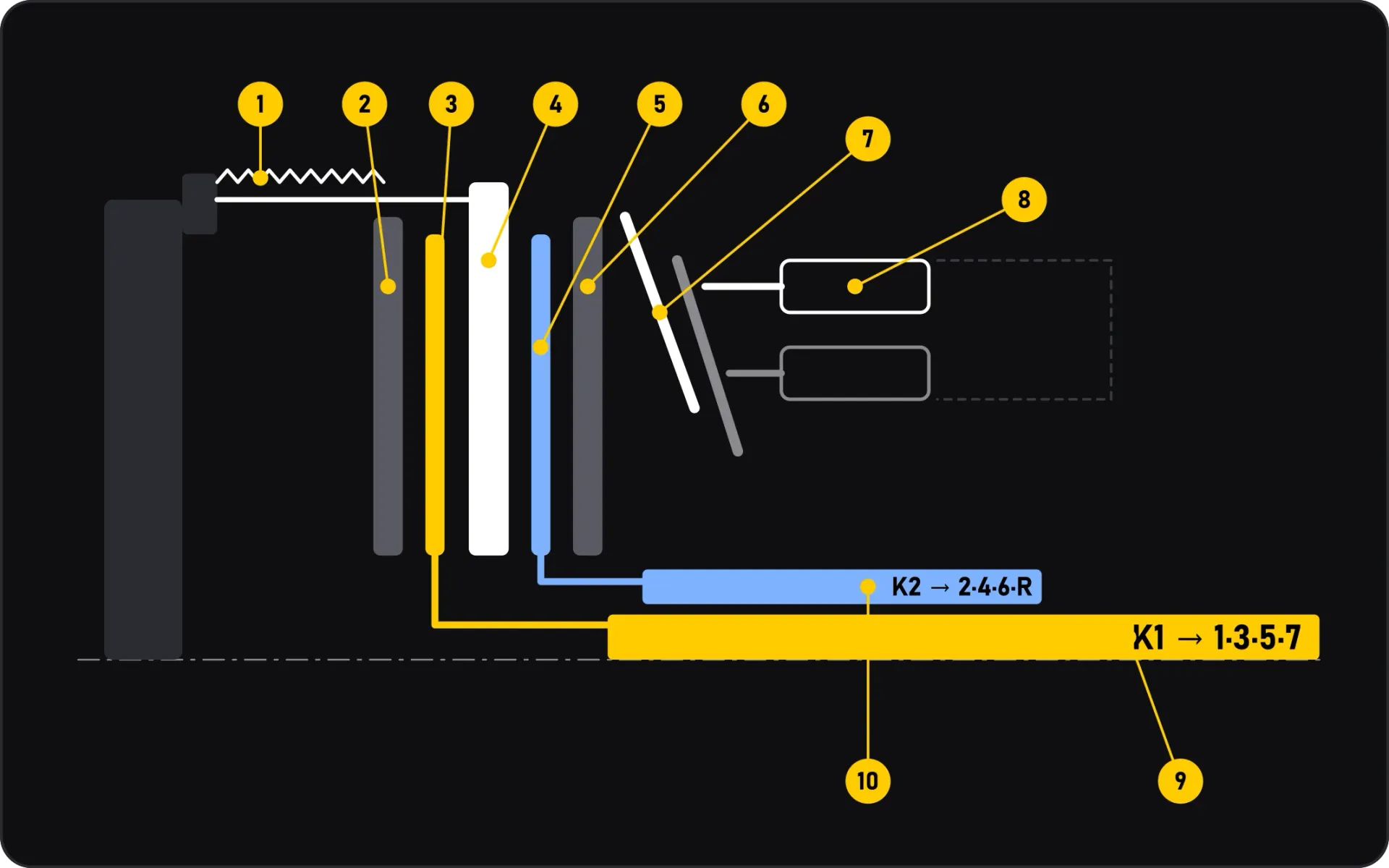
The DQ200 controls its two dry clutches and four shift forks by position, not by feel. To do that, the gearbox control unit (TCU) has to know exactly where each part is: the end positions and the neutral position of every gear actuator, and the point at which each clutch starts to transmit torque — the kiss point. These values are learned and stored in the TCU. A new or different mechatronic, a new clutch or new software does not know them yet.
Without correct learned values the gearbox cannot work properly: it may refuse to drive away, shift late, or engage with a hard jolt.
When is the basic setting needed?
- After replacing or repairing the mechatronic unit.
- After replacing the dual clutch.
- After a software update or software adaptation of the gearbox control unit.
- When the fault memory contains an entry saying that the basic setting has not been carried out.
The basic setting is not a cure for every shifting complaint. If the gearbox shifted well before and the complaint started on its own, find the cause first — a basic setting on a faulty unit will usually fail or will not last.
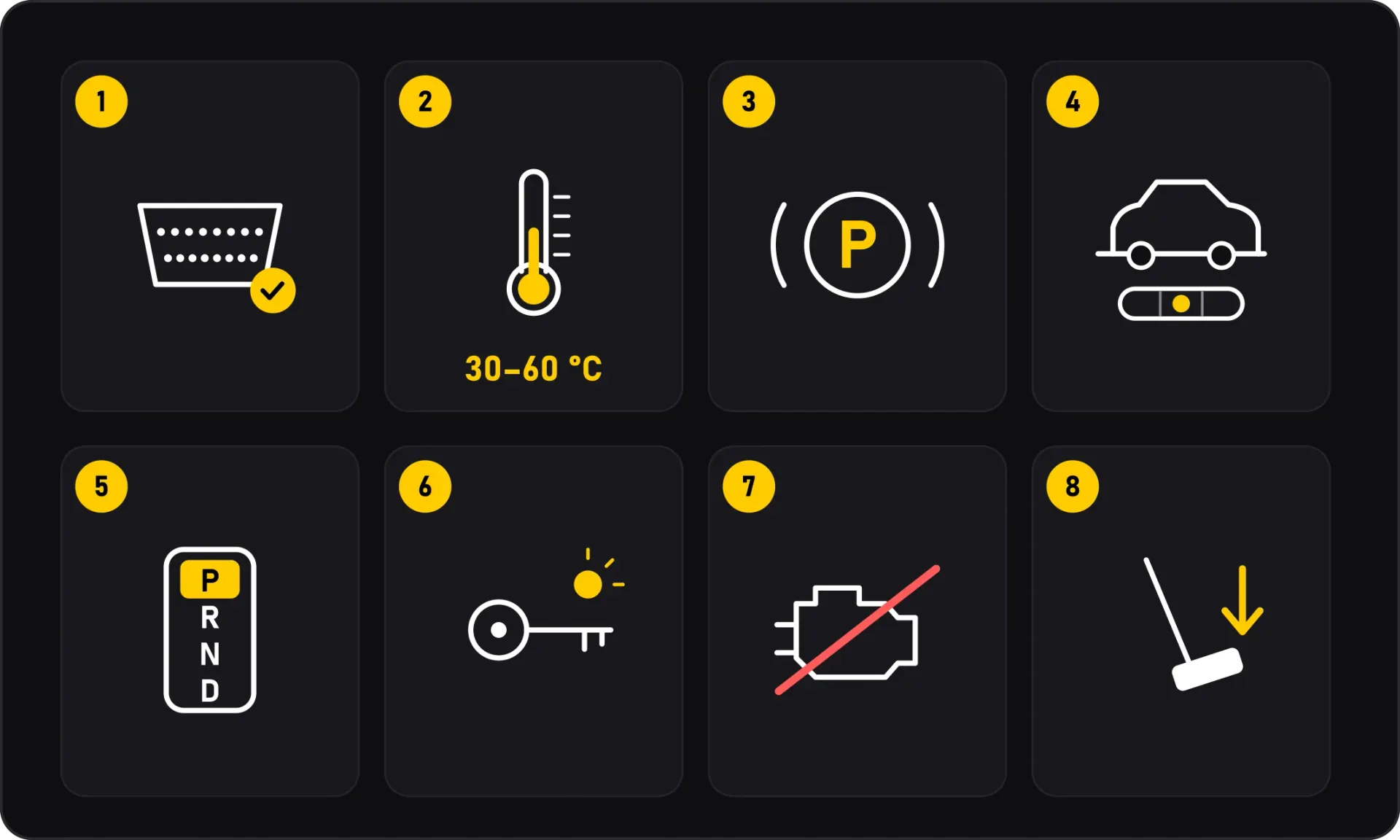
Before you start: eight conditions
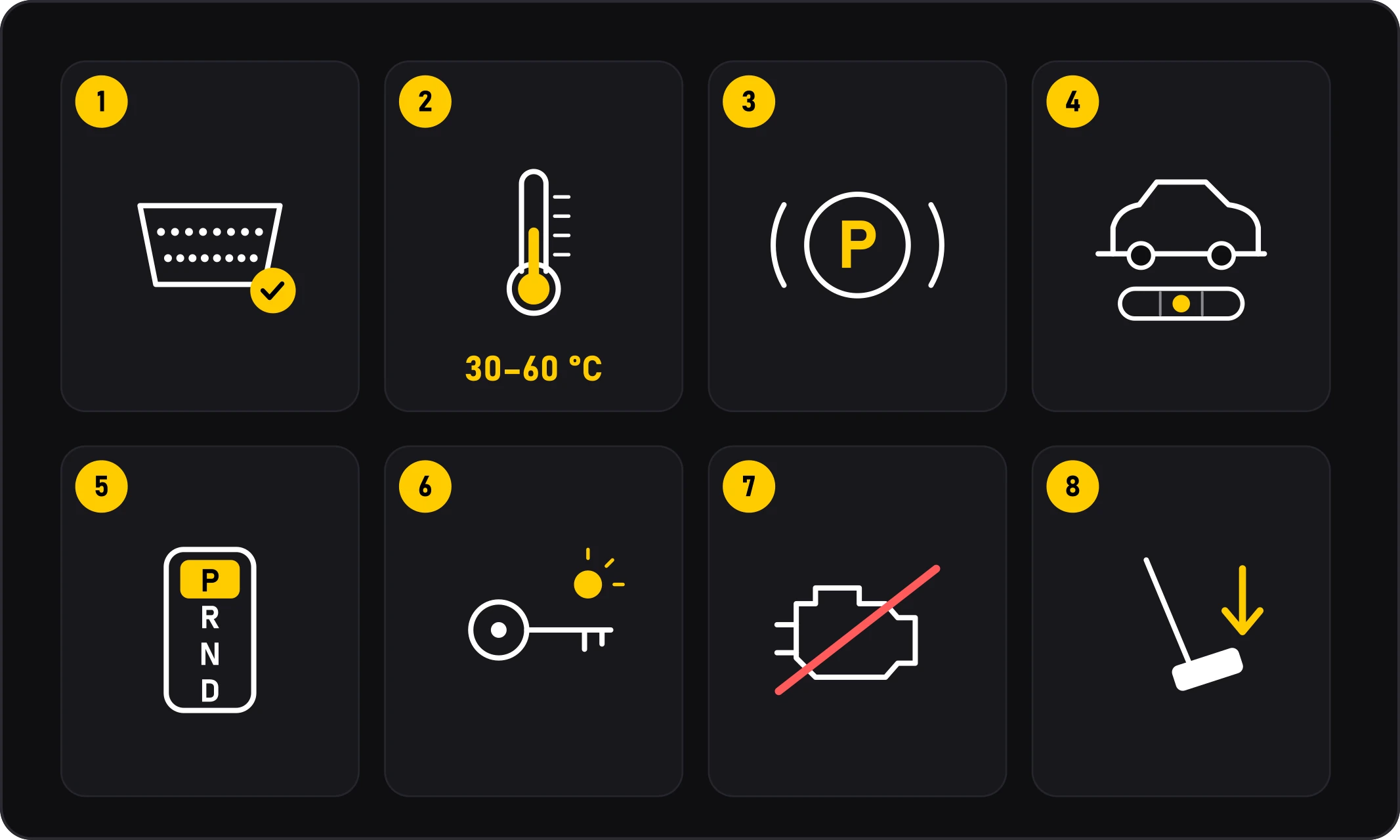
- No faults stored in the gearbox control unit. Read the fault memory, repair what it shows and clear it.
- Gearbox oil temperature between 30 and 60 °C. Too cold or too hot and the procedure will not start or will be aborted.
- Parking brake applied.
- Vehicle level, standing on its wheels — not raised on a lift.
- Selector lever in P.
- Ignition on.
- Engine off at the start; you will be asked to start it later.
- Brake pedal pressed during the procedure.
Also make sure the battery is healthy, or connect a battery charger: the hydraulic pump runs several times during the procedure, and low voltage is a common reason for an abort.
The procedure: two phases
Start the basic setting of the gearbox electronics with a VW Group compatible diagnostic tool. Current tools offer a guided procedure; older tools run it as a basic setting with status fields that change as each step is completed. Either way, the procedure has two phases.
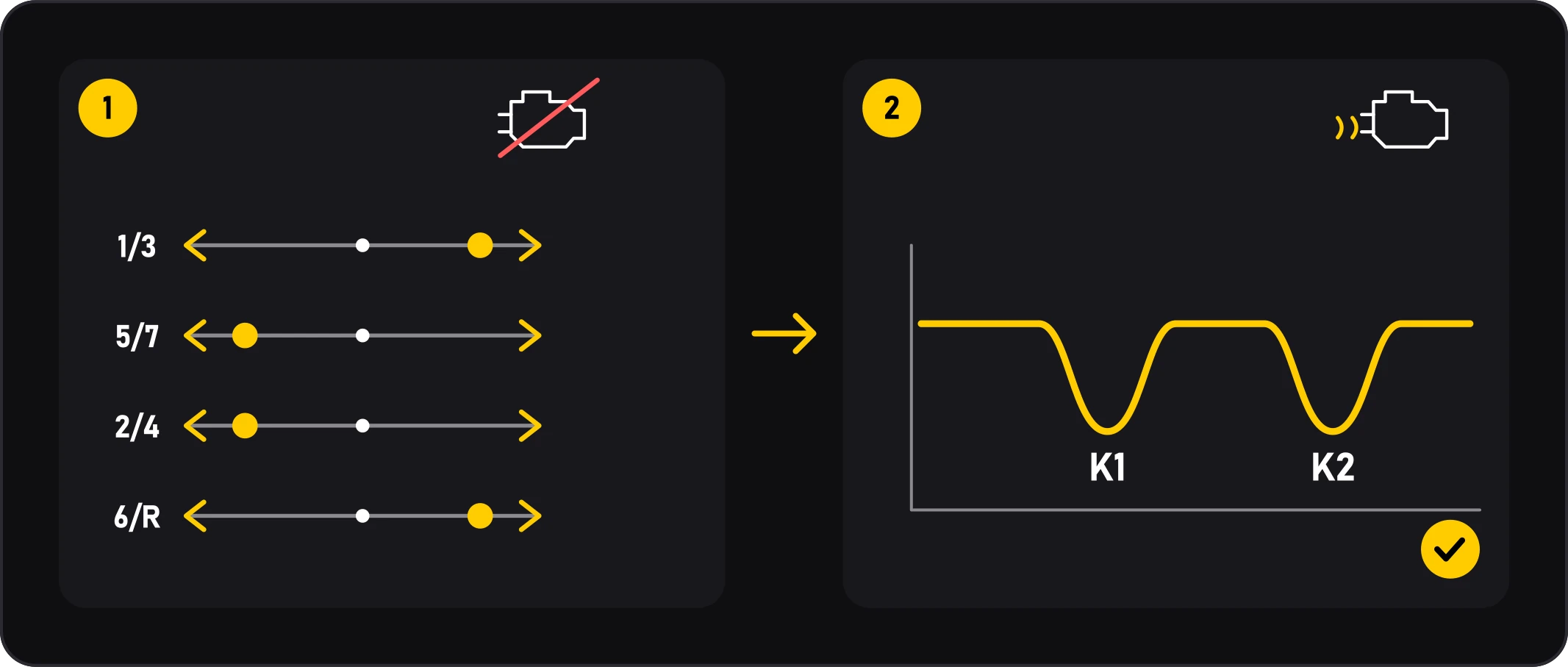
- Engine off — pressure and gear actuators. The pump builds up the system pressure and the TCU checks that it is within range. Then it moves each of the four gear actuators (1/3, 5/7, 2/4 and 6/R) to its end positions and back to neutral, and stores the positions.
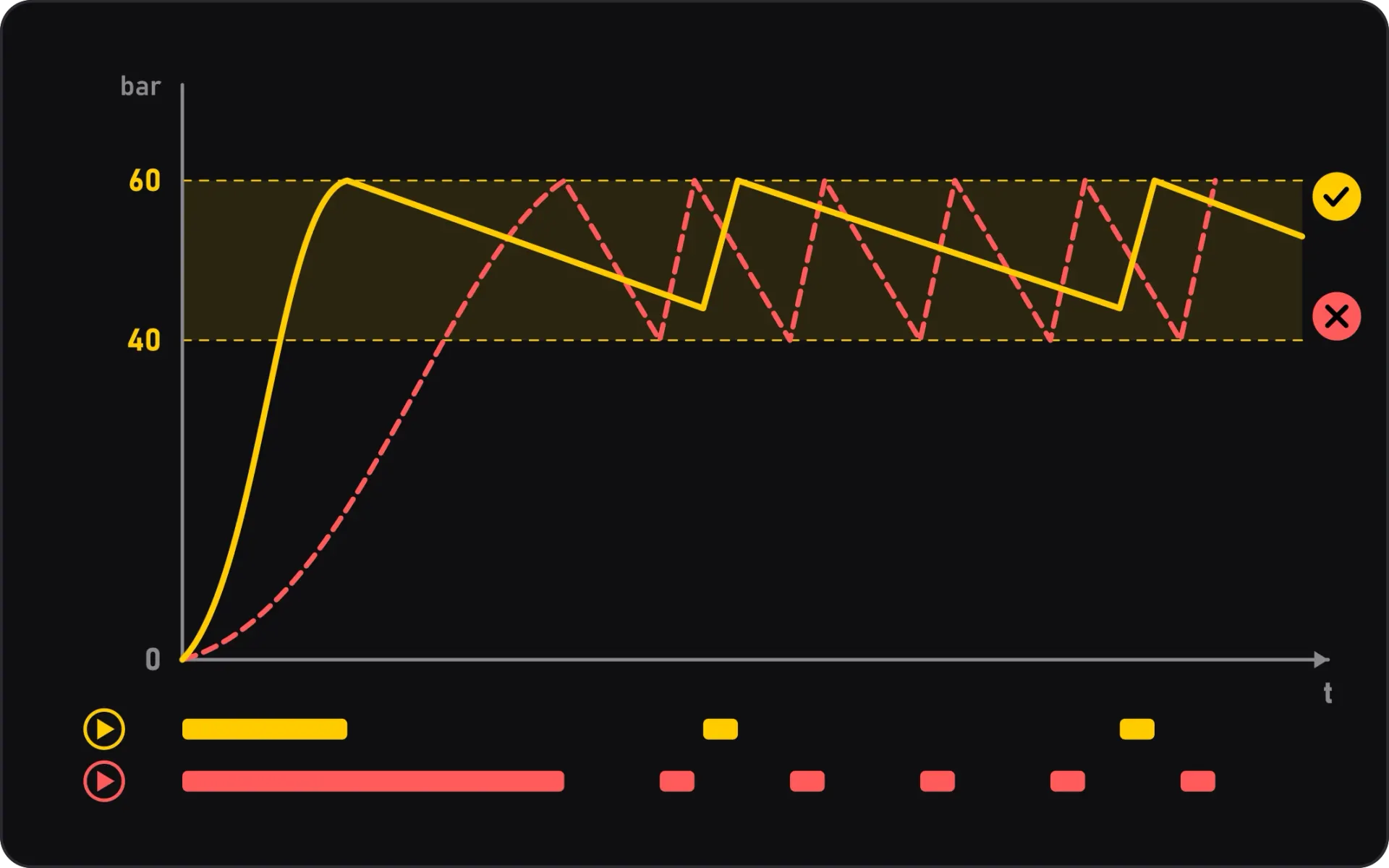
- Engine running — clutch kiss points. When the tool asks, start the engine and keep your foot on the brake. The TCU now closes clutch K1 and then K2 a little at a time to find the point where each begins to transmit torque. You will see the engine speed dip briefly each time — this is normal and shows that the clutch is being learned.
When both phases are complete, the tool reports that the basic setting was successful. Switch the ignition off for a short time, read the fault memory again and clear any entries left over from the procedure.
After the basic setting: drive
The TCU keeps refining its clutch values while the car is being driven. Finish with a calm road test: several pull-aways from a standstill, all forward gears, reverse and some stop-and-go driving. Check the fault memory once more afterwards.
Why the basic setting stops halfway
When the procedure is aborted, the tool shows a status or error message. The wording differs from tool to tool, but most aborts come down to a few causes:
- A condition is not met: oil temperature outside 30–60 °C, a fault in memory, the brake pedal released, the selector moved or the engine started too early.
- Pressure not reached or not held: if the pump needs too long or the pressure drops away, look for a leak — a common cause is a crack at the pressure accumulator mounting. The FDY reinforced accumulator repairs this weak point.
- A gear actuator does not reach its position: a worn or seized shift fork, a worn shift fork sliding bearing, a pin that did not seat in its fork when the mechatronic was fitted, or a sticking solenoid valve.
- A clutch kiss point is unstable or out of range: a worn clutch, a clutch fitted with the wrong adjustment shims, or a clutch valve that does not regulate smoothly — see our article on N439 and jerks into 2nd and 4th gear.
- Unstable idle: if the engine speed is not steady, the TCU cannot measure the kiss point reliably. Fix engine problems first.
Test the mechatronic before the basic setting
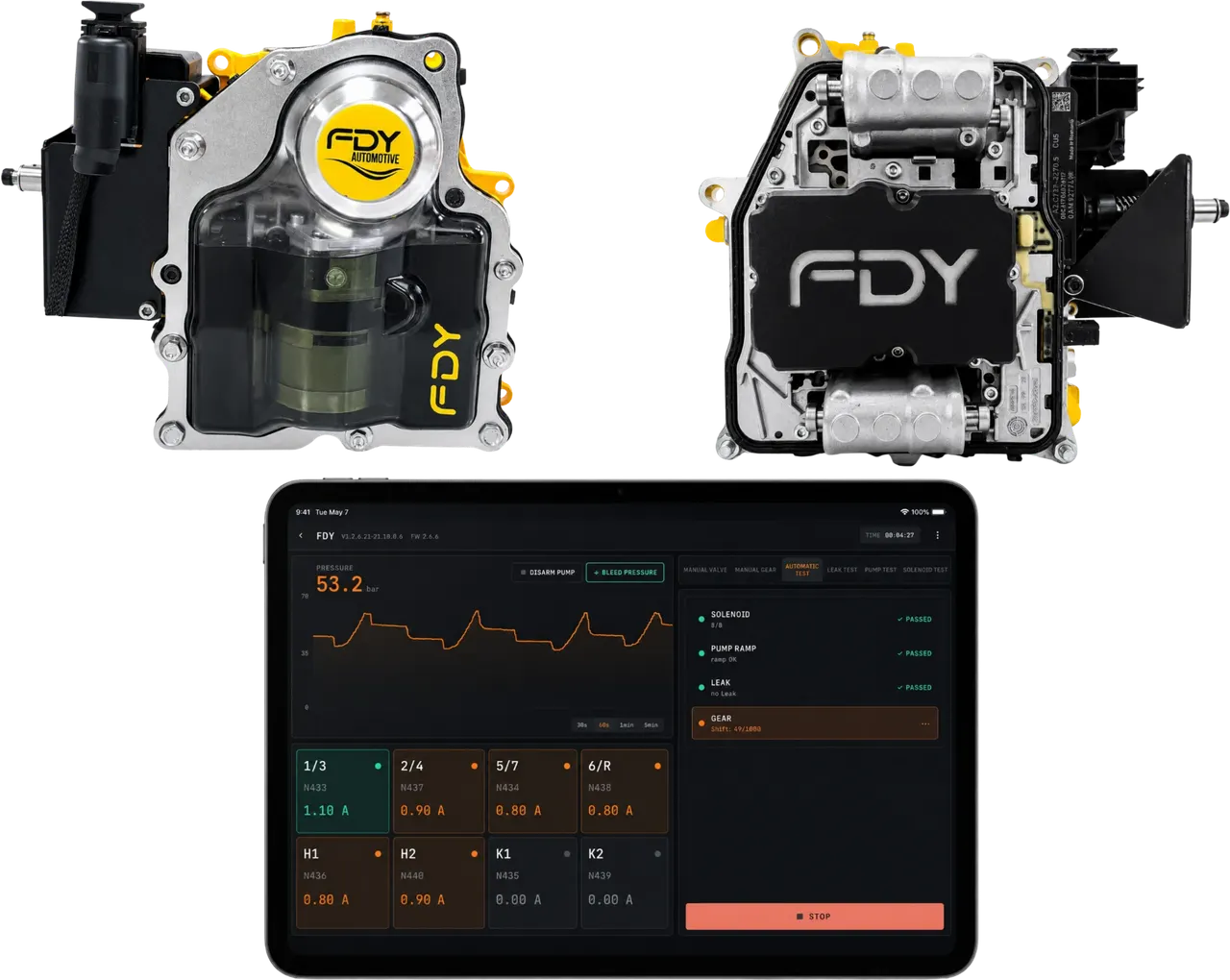
Many failed basic settings are really mechatronic faults that were fitted into the car. The FDY mechatronic test device checks the pump, the pressure build-up, the leak tightness, every valve and every gear actuator on the bench — so you know the unit is healthy before you start the basic setting in the car.
Frequently asked questions
01Is a basic setting needed after replacing the DQ200 mechatronic?+
Yes. After the mechatronic is replaced or repaired, the gearbox must learn the gear actuator positions and the clutch kiss points again. Without the basic setting it may not drive away or may engage harshly.
02What oil temperature is needed for the DQ200 basic setting?+
The gearbox oil temperature must be between 30 and 60 °C. Outside this range the procedure will not start or will be aborted.
03Why does the engine speed drop during the basic setting?+
In the second phase the TCU closes clutches K1 and K2 slightly to find their kiss points. The engine feels the load and its speed dips for a moment. This is normal.
04Can I do the basic setting with the car on a lift?+
No. The car must stand level on its wheels, with the parking brake applied, the selector in P and the brake pedal pressed.
05The basic setting keeps failing — what next?+
Check the conditions first, then the pressure supply, the gear actuators and the clutch. If the cause is not clear, test the mechatronic on the bench before trying again.
Talk to a DQ200 specialist
Send us the message your diagnostic tool shows when the basic setting stops, and our engineers will help you find the cause. FDY supports workshops and distributors 24/7 — contact us.