On this page+
You start the car, move the selector to D — and nothing happens. Or the gear indicator flashes for a few seconds before the car finally creeps forward. Or you can hear the gearbox pump running for a long time after you switch on the ignition. On the 7-speed DQ200 DSG, these complaints are rarely random. Before the gearbox lets the car drive, its control unit runs a series of checks, and if one of them fails or takes too long, engagement is delayed or refused.
Knowing these checks tells you where to look.
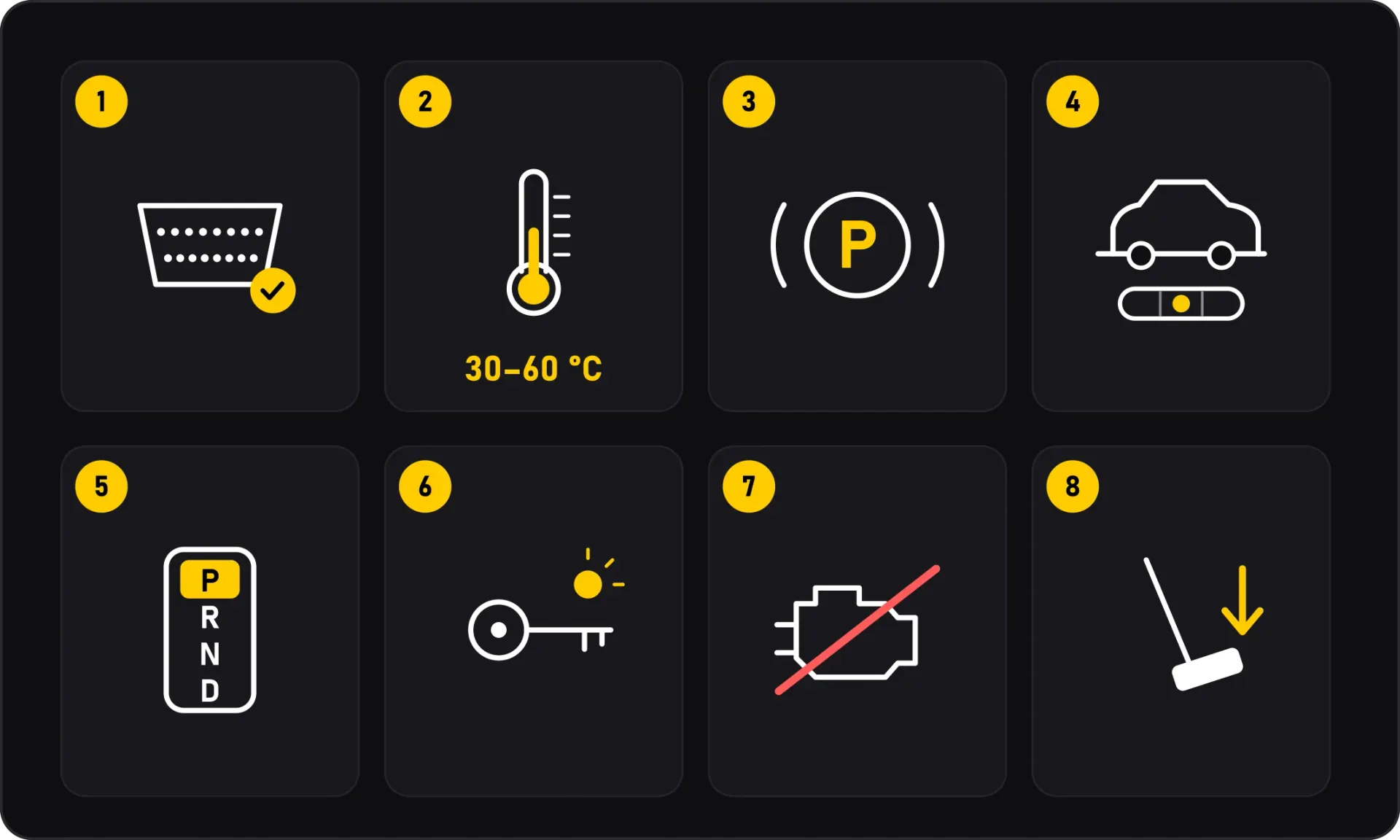
Seven checks before the first gear
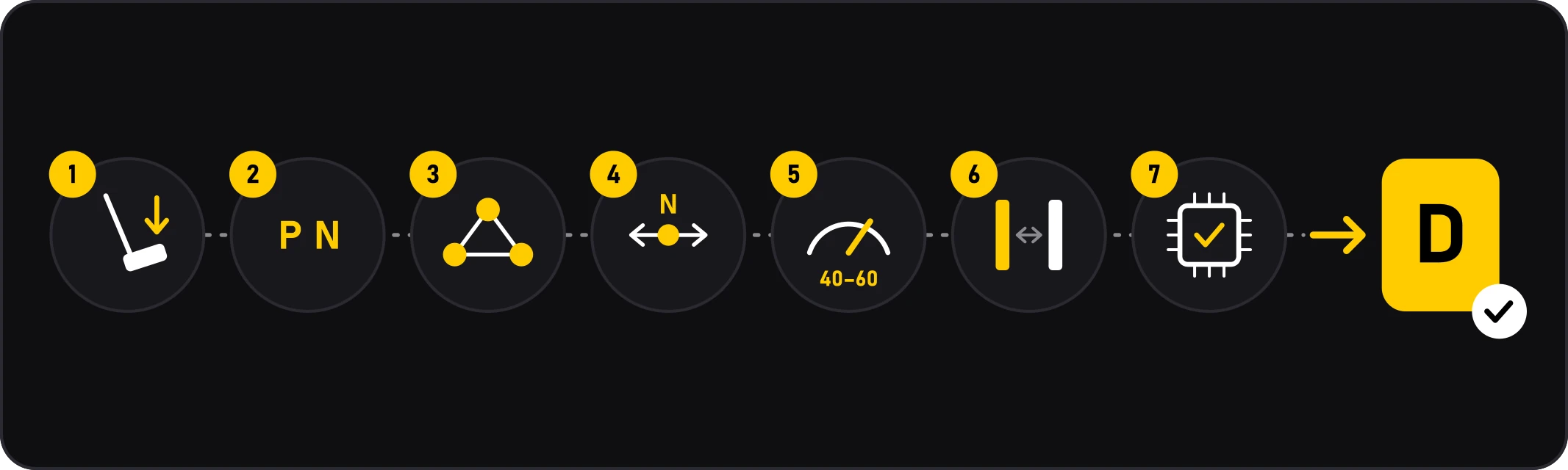
- Brake pedal: both brake signals must report that the pedal is pressed.
- Selector lever in P or N when the engine is started.
- Data bus: the other control units — engine, ABS, instrument cluster, selector lever and steering column electronics — must answer on the CAN data bus.
- Gear actuators in neutral: all four shift forks must be in their neutral position, so that no gear is engaged at start-up.
- System pressure: the hydraulic pressure must be in its normal working range, roughly 40 to 60 bar.
- Clutches open: the positions of clutches K1 and K2 are checked — both must be open.
- Self-test: the control unit checks its own internal circuits.
Only when all seven are passed and you move the selector to D does the mechatronic engage the first gear and close the clutch. If one check fails, the gearbox waits, shows a flashing gear indicator or stores a fault and stays in neutral.
Pressure is the most common reason for a delay
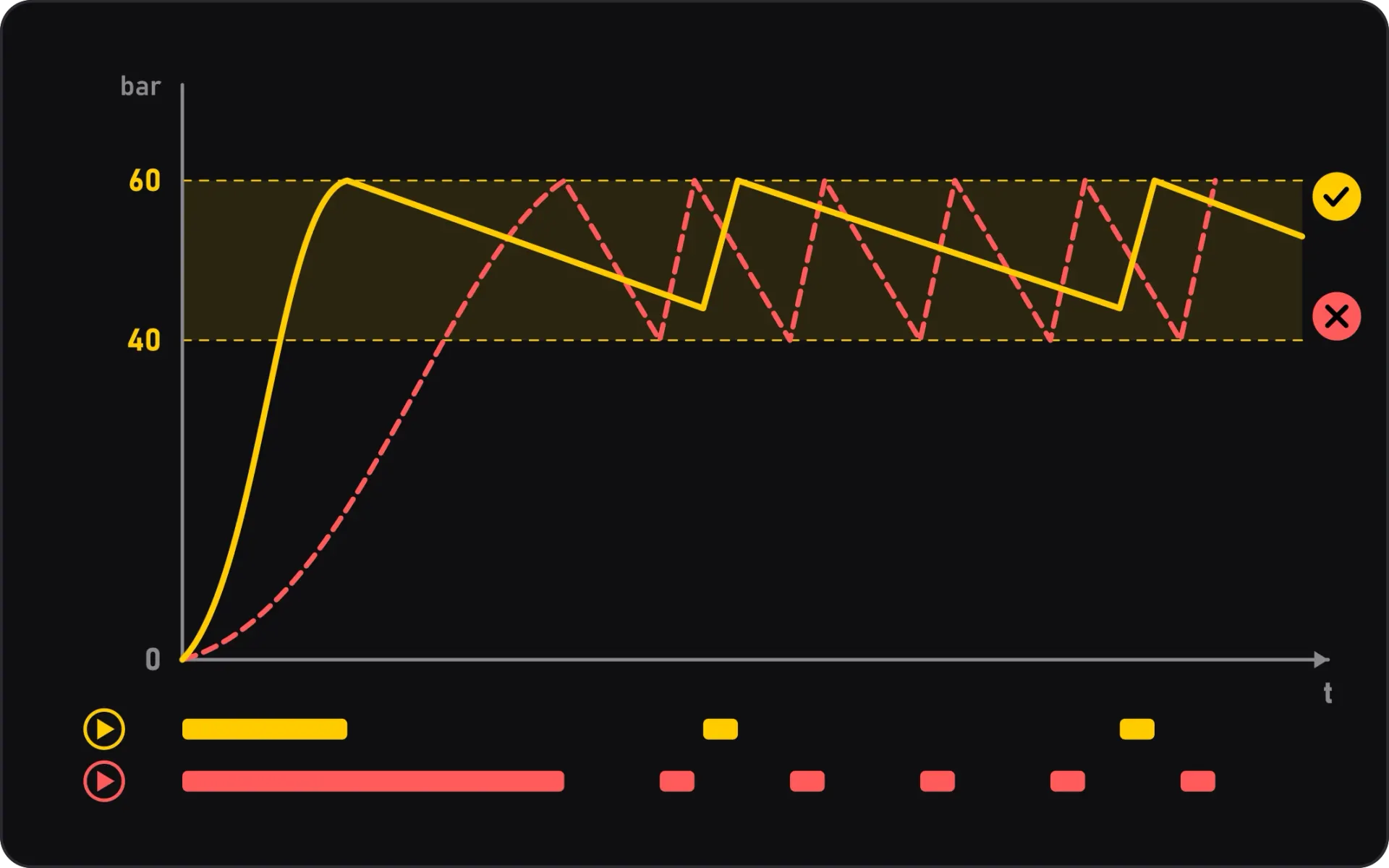
The DQ200 builds its hydraulic pressure with an electric pump, and a pressure accumulator stores it. With a healthy system, the pump fills the accumulator within a few seconds after the ignition is switched on, then switches off; while you drive it only runs for short top-ups.
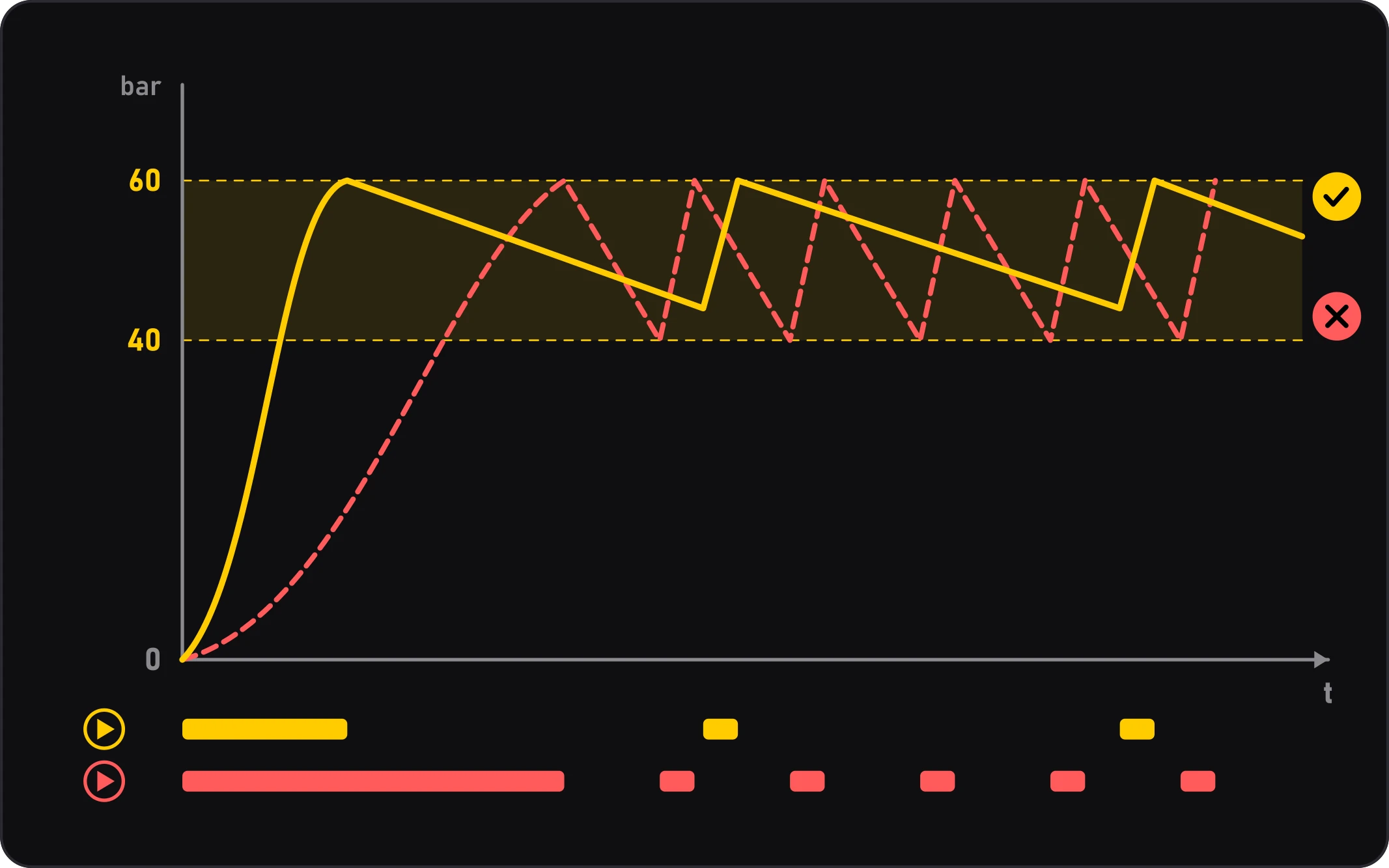
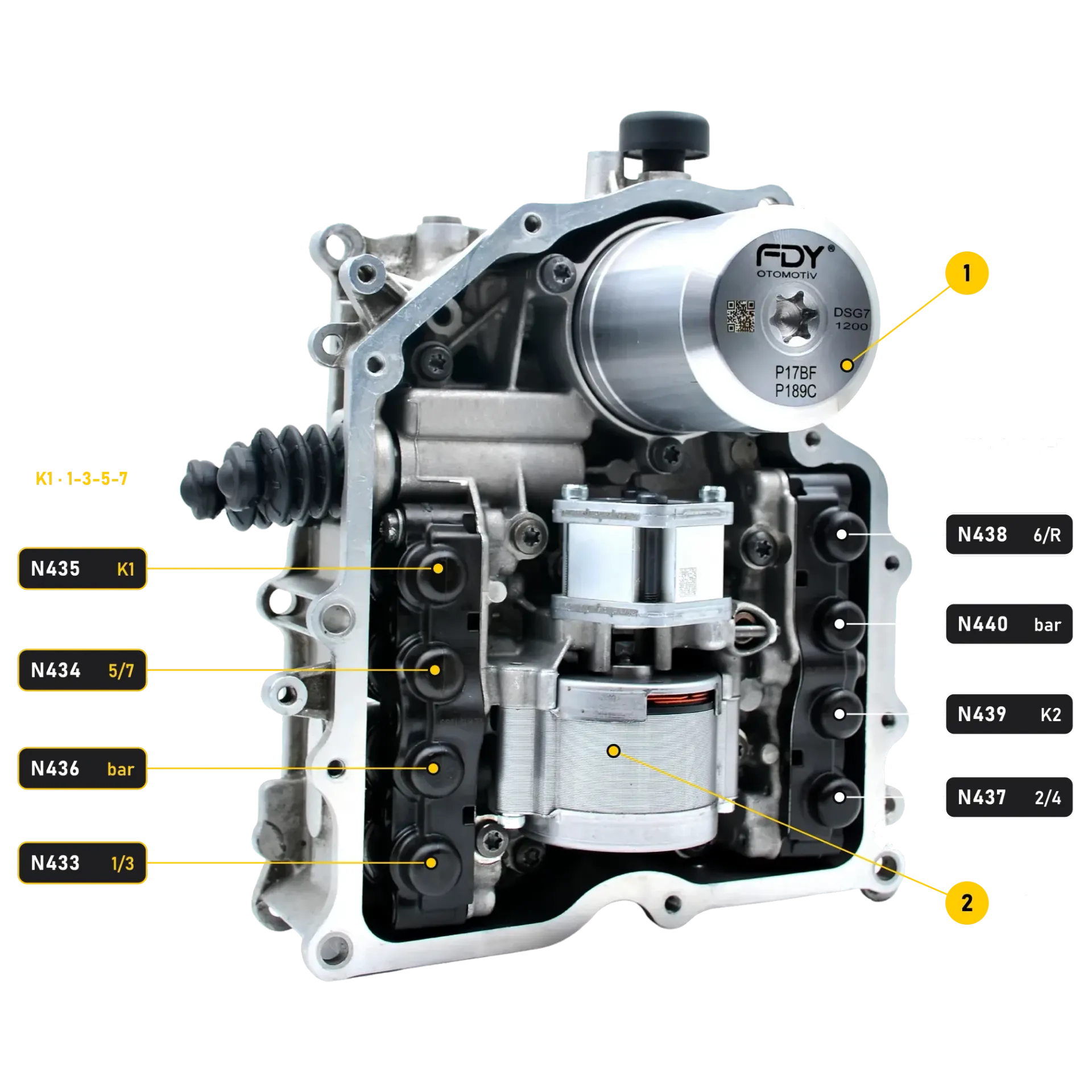
If the system leaks, two things change: after a stop the pressure has disappeared, so it has to be built up from zero every time, and the pump needs longer to get there. While you drive, the pump starts again and again. The car engages late, the pump can be heard for a long time, and sooner or later the gearbox stores a pressure fault such as P17BF or P189C.
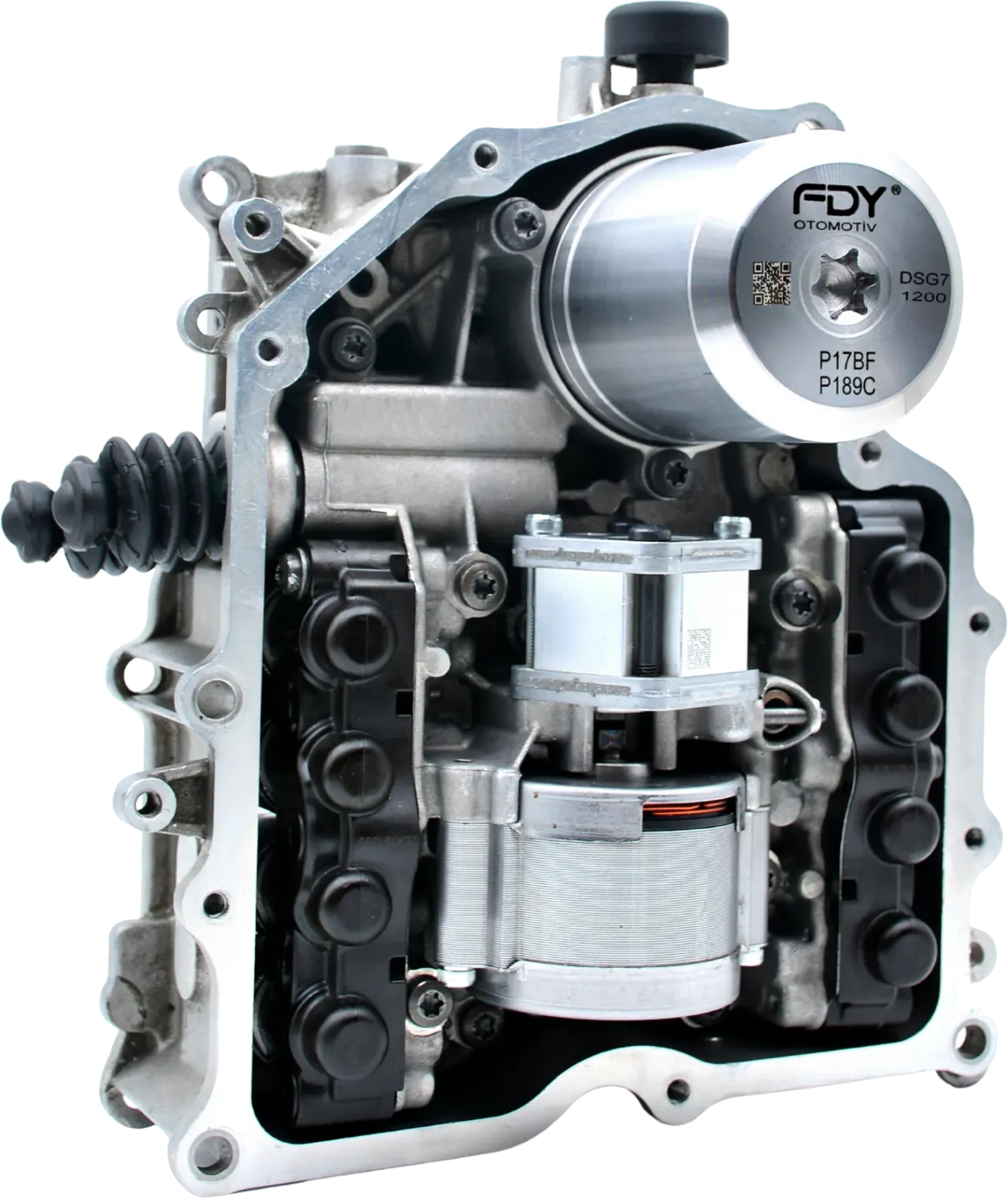
The most common cause of this pattern is a crack at the attachment point of the pressure accumulator. It is usually invisible from the outside and gets worse with every pressure cycle. The FDY reinforced accumulator repairs this weak point with a double-wall steel design.
Other causes, by symptom
- The pump runs long after the ignition is switched on, then the car engages: pressure loss — the accumulator mounting, an internal leak in the valve body, or a weak pump.
- The gear indicator flashes and D cannot be engaged even with the brake pressed: check the brake signals and the data bus messages first; a faulty brake light switch or a missing CAN message is enough to block engagement.
- After a mechatronic repair, a gear cannot be engaged: a gear actuator pin may not have seated in its shift fork, or the basic setting has not been carried out. See our DQ200 basic settings guide.
- Problems appear mainly with a weak battery: low voltage slows the pump motor and can store an undervoltage fault. Check the battery and the ground connections before replacing parts.
- The car drives but only in some gears: this is emergency mode, explained in our article on DSG emergency mode.
How a workshop narrows it down
- Read and save the fault memory of the gearbox control unit, including the freeze-frame data.
- With the ignition on, watch the system pressure in the live data and listen to the pump: how long does it need, and does it start again while the car is standing?
- Check the battery voltage while the pump is running.
- Check the brake signals and the selector position in the live data.
- If the pressure supply is suspect, test the mechatronic on the bench before replacing anything.
The FDY mechatronic test device measures the pump run time, the pressure build-up and the leak tightness of the body and of each valve, so you can see whether pressure is lost at the accumulator mounting, in the valve body or at a single valve. Our DQ200 fault code list explains the most common codes.
Frequently asked questions
01Why does my DSG take a few seconds to engage after starting?+
The mechatronic needs hydraulic pressure before it can engage a gear. If the system has lost pressure while the car was parked — often because of a crack at the pressure accumulator mounting — the pump has to build it up from zero, and engagement is delayed.
02Is it normal to hear the DSG pump after switching on the ignition?+
A short pump run after the ignition is switched on is normal. If it runs for a long time every time, or keeps starting while the car is standing, the system is probably losing pressure.
03What pressure does the DQ200 mechatronic need?+
The system works in a range of roughly 40 to 60 bar. Below that range the control unit will not engage a gear.
04Can a faulty brake light switch stop a DSG from engaging?+
Yes. The gearbox checks the brake signals before it engages. If they are missing or implausible, D may not engage and the gear indicator may flash.
05Does delayed engagement always mean a new mechatronic?+
No. A cracked accumulator mounting, a battery problem or a single faulty part are common causes. A bench test shows what has actually failed.
Talk to a DQ200 specialist
Send us your fault codes and describe what happens when you start the car, and our engineers will tell you where to start. FDY supports workshops and distributors 24/7 — contact us.